
craftsman
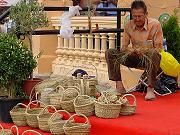
Craftsman It is a concept related to or related to crafts. Craftsmanship, for its part, refers to job made of manual way by a person, without the aid of mechanical energy. Also the product that is obtained from this manual labor receives the same name. In turn, the handmade pieces are all different from each other, which clearly differentiates them from those obtained through Industrial production or of serial work.
An artisan, therefore, is someone who performs manual labor and is dedicated to selling their products in a particular way, without intermediaries. Many times, he even works on demand, making pieces to suit his clients. Generally the purposes of this work are artistic: the passion for a task rather than the monetary result of it. That said, it is important to clarify that given the etymology of the word, a craftsman is an artist with his hands.
One feature to highlight is that artisans often use indigenous materials of the area in which they live for what their crafts offer beyond their beauty, a message of respect for the territory and the environment. In addition, the manufacture of their pieces is cheaper if they work in this way. Thus, those who live in a coastal area use seashells, while in wooded areas, handicrafts made with wood predominate.
exist different sections in which the artisans stand out, the best known are: making decorative objects (from pendants and rings to lamps and large designs), furniture and wooden objects (home furnishings and decorative objects made only of wood or combining this material with iron or others), artisanal food (it is made without industrial or artificial ingredients), illustrations and books of small print runs (unlike the large publishers; these artisans manufacture each book individually, an intense and passionate work ).
The artisan fairs They are spaces where workers in the sector meet to market their creations and become known in the environment. These spaces, generally located outdoors and host different stands where artists put their products on display and visitors walk around and can buy. Artisans can also sell their pieces in their own workshops, on the street or in commercial premises (although the latter option is less frequent given the cost of rent or maintenance).
Differences between hippies and artisans
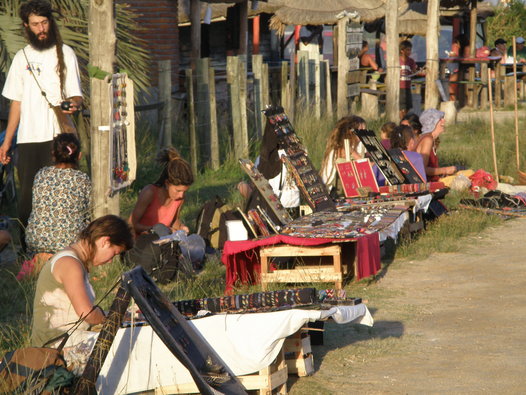
In recent years the term craftsman has been erroneously mixed with the Anglo-Saxon word "hippie", thus calling those people dedicated to the itinerant sale of their products. It is important to note that a hippie is a person who has been captivated by the countercultural movement of the same name, which emerged in the United States in the sixties whose main objective was mobilize the world in search of peace.
This confusion arose because, in the mid-90s, many young people eager for greater freedom abandoned their homes and began to subsist designing small crafts and selling them on the street. Since the hippies did something similar (leave society to retire to live in the country and living a life detached from social rules and norms) they were confused with them, and began to call them in the same way.
It should therefore be mentioned that, although it is true that many artisans also consider themselves hippies because they admire certain references from those years, the vast majority even ignore where this word comes from and what motivates them to lead to that life are not those objectives revolutionaries, but other causes.
Leave a Reply