
Anglo-Saxon
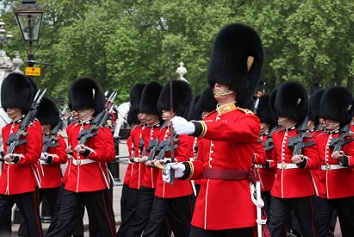
Anglo-Saxon is a word from medieval Latin that came to Castilian as Anglo-Saxon. The concept can be used to qualify the speaker idiom English or is it originally from England.
For example: "The members of the royal guard, with their tall hats, constitute one of the most famous Anglo-Saxon postcards in the world", "In my adolescence I listened to a lot of Anglo-Saxon rock, I liked bands like The Who and Pink Floyd", "The Anglo-Saxon writer was invited to participate in the next edition of the Fair International of the Buenos Aires Book ".
Anglo-Saxons are also called Germanic peoples who invaded English territory in the 5th century. To the language spoken by those who were part of said cultures it is also called Anglo-Saxon.
The ancient Anglo-Saxons, thus, were the Germanic communities that advanced through the east and south of Britain between the beginning of V century Y 1066, when the Norman conquest occurred. His language, known as Anglo-Saxon or old English, was imposed on England and in regions of Scotland in that period.
These communities began their migration towards Britania between the years 400 and 600, and they did it starting from Holland, the south of Scandinavia and the north of Germany. According to the work Ecclesiastical history of the English people, written in Latin by the Northumbrian Benedictine monk known as Bede the VenerableAmong the invaders were Jutes, Saxons and Anglos. On the other hand, there are documents that also include the Franks and the Friesians.
It should be noted that there is another work in which the migration of said towns, the so-called Anglo-Saxon Chronicle, a collection written in Old English dating from the 9th century and estimated to have been created in the Kingdom of Wessex.
By the way, it is necessary to talk about the name Britannia, since in this way Britain was referred to before the German invasions. The origin of this name is in the time of the Roman Empire, since at that time the island was known as Britannia. In turn, we can say that it was the Greeks who baptized it in the first place, with two terms that can be translated as "island" and "tattoo", probably because of the impressive tattoos that its inhabitants wore.
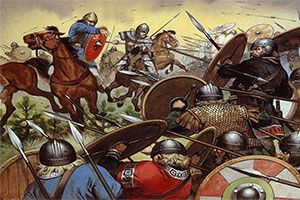
In 597 the process of evangelization of the Anglo-Saxons began, which took approximately a century, since it is estimated that its completion date was the year 686. Throughout 600 and 700, the kingdoms of greater extension were transferred to the can. Bede the Venerable mentions in his work Etelberto, the king of Kent, a kingdom located southeast of the Island, as the most prevalent monarch in the second half of the 6th century; however, everything indicates that later power was disputed in the north, between the kingdoms of Northumbria and Mercia.
After the conquest was completed, it is believed that many of the Anglo-Saxon nobility were exiled, and others descended to the social class more low. It is believed that at the end of the 11th century, only 8 percent of the territory belonged to them. The destinies of most of the nobles were Scandinavia, Ireland and Scotland.
It is interesting to note, therefore, that the idea Anglo-Saxon can refer both to a language that is no longer spoken and to current English. Depending on the context, the term can refer to one or the other.
The epic poem "Beowulf"For example, it is a famous literary work written in Anglo-Saxon (Old English). It has more than 3000 verses and narrates the epic of a hero who defeats terrible monsters and is consecrated king of the geese.
Leave a Reply