
anaphase
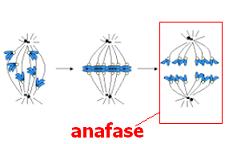
The anaphase is one of the stages of the mitosis and of the meiosis, two methods of cell reproduction. In anaphase the separation of chromosome pairs that are homologous.
In this instance, therefore, chromatids (the units of the chromosome that have already been duplicated) move to the opposite sector of the cell through the achromatic spindle, composed of various microtubules arising from the centrioles in the framework of the process.
Mitosis takes place in the core of eukaryotic cells to distribute genetic information equitably. Anaphase is the stage that follows interface, the prophase, the prometaphase and the metaphase, in that order. It starts from the regulation of proteins while the transition between metaphase and telophase (the instance that continues to anaphase).
Anaphase in mitosis
When anaphase begins in mitosis, the sister chromatids completely separate and move in the direction of the poles opposites of the cell being divided. In this context appears the kinetochore, a protein complex that can be considered the fundamental point that contacts the chromosomes with the microtubules; the cinecotoro goes through an assembly process at each centromere.
The microtubules that are responsible for contacting the cinechotoro are known by the name of K fibers; are made up of certain proteins, such as tubulin, and its function in this case, it is progressively shortened to transport the chromatids to the corresponding cell pole.
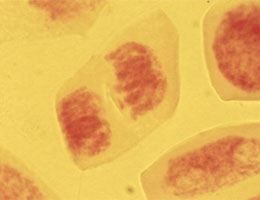
Another of the phenomena What can be seen at the beginning of anaphase in mitosis is the regulation of the transition proteins that takes place from metaphase. When this moment arrives, the promoter complex is activated and the cyclin that kept the metaphase going is deactivated. Likewise, the deactivation of the protein called securina, which inhibits a protease called separase; the latter, can then separate the protein cohesin, which is responsible for maintaining the union between the two chromatids, and this is where the anaphase itself is considered to begin.
In the anaphase of mitosis it is possible to distinguish between early anaphase (where the separation of the chromatids by the action of the kinetochores and the shortening of the achromatic spindle are recorded) and the late anaphase (The fibers, after complete separation of the chromatids, are shortened even more so that these chromatids reach the poles of the cells).
Anaphase in meiosis
Throughout meiosis, we can find the anaphase I and the anaphase II, although there are also successive divisions: the first consists of prophase I, metaphase I, anaphase I and telophase I, while the second takes place prophase II, metaphase II, anaphase II and telophase II.
During anaphase I, the separation of the centromeres begins due to the attraction that the poles exert on them, and each one is dragging the two chromatids that are attached in its path. For bivalent or homologous chromosomes in which there are no chiasms (the crossing of structures organic, in this case non-sister chromatids), the separation simply occurs; on the other hand, when there are chiasms, the chromosomes advance by sliding to the chromosomal ends.
It is important to note that we can see a similarity between the anaphase of meiosis and what takes place in mitosis, specifically when the daughter centromeres separate and carry the chromatids (also known as chromatidia, are the two filaments that make up the chromosome).
Leave a Reply