
The 8 types of seizures (causes and symptoms)
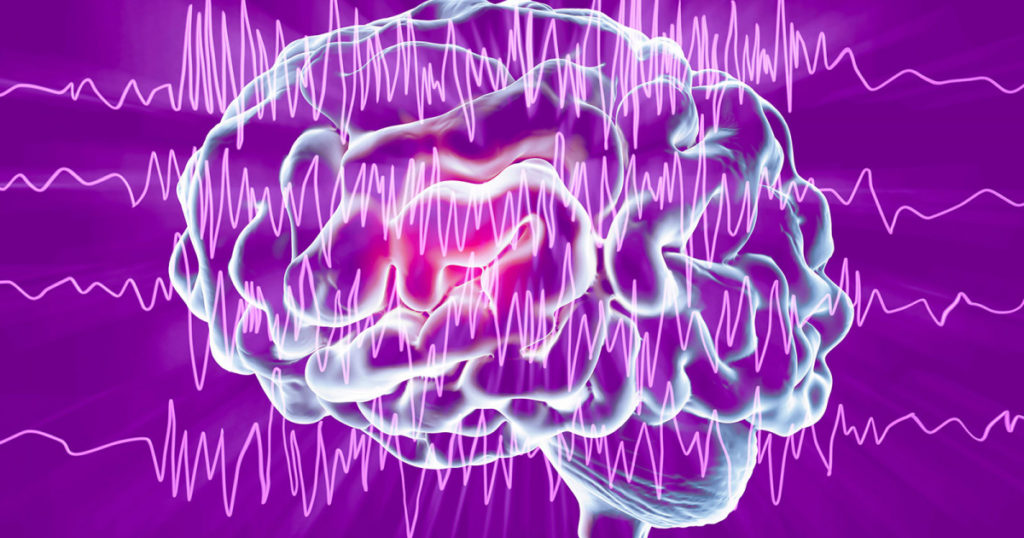
All the muscles of the body, both those of voluntary control and those of involuntary control, are connected to the nervous system. And it is through the synapse that neurons send electrical information to muscle fibers so that they contract or relax depending on the body's motor needs.
Therefore, it is not surprising that, when there are problems of neurological origin, things such as seizures, involuntary, violent and pathological contractions of certain muscles can happen due to a problem of brain origin, since the brain sends excessive and abnormal discharges to a muscular region of the body.
There are many different types of seizures, each having specific causes and symptoms. Still, most seizures last between 30 seconds and 2 minutes and, alarming as it may sound, they do not cause lasting damage. But when these last more than 5 minutes, then yes we are facing a medical emergency.
Thus, in today's article and from the hand of both our team of collaborating neurologists and the most prestigious scientific publications, In addition to defining what seizures are, we will see how they are classified and what are the clinical bases of each of them. Let us begin.
How are seizures classified?
Seizures are all those uncontrollable and violent movements of the body's muscles that arise as a symptom of a brain problem, with a sudden appearance of abnormal electrical activity in the brain. And although there are times that seizures manifest with the typical jerks, many times and depending on the type, the symptoms are mild.
Therefore, at a general level, we can define a seizure as a sudden and uncontrolled electrical alteration in the brain, which modifies the level of consciousness, behavior, muscle movements or feelings. Many times, the causes behind seizures are unknown, but what we do know is how they are classified.
Seizures are divided into two large groups based on which region of the brain is affected: focal and generalized. Thus, we are going to analyze the particularities of each one of them and, of course, the different subtypes within them. Let us begin.
1. Focal seizures
Focal seizures, also known as partial seizures, are those that arise as a result of abnormal electrical activity in an area of the brain. But only in a specific region. Hence they are known as partial. Many times, they can be confused with other neurological disorders such as migraine. Depending on whether or not it is associated with a loss of consciousness, we can differentiate between two types of focal seizures:
1.1. Partial seizures with loss of consciousness
The partial seizures with loss of consciousness are those focal seizures whose experimentation is linked to a change or loss of the level of consciousness, so that the person, when the seizure ends, has the sensation of having been dreaming. The person who convulses may appear awake, but does not respond to the environment and his gaze is fixed on a point in space.
They are complex seizures and the person will not be able to follow directions for a few minutes. Typically, a person with a seizure of this type performs movements with their mouth, begins to walk in circles, repeats specific words or rubs their hands uncontrollably. When it is over, you usually do not remember what happened and may not even know that you have had a seizure.
1.2. Partial seizures without loss of consciousness
The partial seizures without loss of consciousness are those focal seizures whose experimentation is not associated with a change or loss of the level of consciousness, so that the person is aware at all times of what is happening. You do not lose consciousness while the seizure is taking place.
They are simpler seizures than the previous ones and less alarming at the level of clinical signs. In fact, many times, these periods of alteration in brain electrical activity are manifested with changes in the experimentation of the senses (sight, hearing, touch, taste or smell) without actually experiencing loss of consciousness. Sudden mood swings are relatively common, and physical symptoms, if they appear, tend to be associated with jerky movements in the arms or legs, dizziness, and a tingling sensation in certain regions of the body.
2. Generalized seizures
Generalized seizures are those that are produced by an alteration in the electrical activity of all areas of the brain. They affect both hemispheres of the brain, hence they are known as generalized, since it is not limited to one brain region. They usually involve loss of consciousness and, depending on their medical bases, the following six types can be differentiated: absence, tonic, clonic, tonic-clonic, myoclonic and atonic. Let's see its characteristics.
2.1. Absence seizures
Absence seizures, better known as absence seizures, consist of seizures that can cause rapid blinking or staring into the distance but do not last more than 5-10 seconds. Formerly known as seizures petit mal or minor epilepsy, usually occur in young children.
They can be accompanied by very subtle and slight convulsive lip smacking and body movements. In some cases, they can occur several times in the same day. And if they occur in a group, they can be accompanied by a brief loss of consciousness. For this reason, more than as a seizure, it is known as an absence crisis, since what is most observed is a momentary “self-absorption”. More than half of the cases resolve after 3 years of age.
2.2. Tonic seizures
Tonic seizures are those episodes of generalized seizures that are associated with muscle stiffness. Therefore, there is an affectation to the muscles of the body, especially of the back, legs and arms, being closely linked, depending on the context in which they occur, to falls and, sometimes, loss of consciousness.
It is in these seizures that a very powerful muscle contraction occurs due to an alteration in brain activity and that causes a high level of rigidity to be observed in a specific muscle or muscle group. There are no jerky movements, just stiffness. In the same way, they are resolved within a few seconds.
23. Clonic seizures
Clonic seizures are those episodes of generalized seizures that are linked to repetitive or rhythmic jerky muscle movements, generally affecting the muscles of the neck, arms and face. Thus, the alteration of the electrical activity of the brain causes spasms in the muscles on both sides of the body.
They usually occur repeatedly every 2-3 seconds, but are of short intensity and power, following jerky movements of a certain rhythm. While these clonic seizures persist, a part of the body shakes or jerks.
2.4. Tonic-clonic seizures
Tonic-clonic seizures are those episodes of generalized seizures are the most intense type of seizure. Formerly known as major epilepsy or grand mal seizures, they can cause, in addition to an abrupt loss of consciousness, both stiffness and shaking in the body. They therefore combine tonic and clonic seizures, as can be deduced from their name.
They can last several minutes, so they are the most serious. And in addition to the combination of stiffness and spasms in the muscles of much of the body, there may be a control of the sphincters of the bladder (so the person can urinate on) and tongue biting that, sometimes, can cause serious injuries.
The patient becomes totally rigid, with the arms bent and the legs straight, guttural noises are made due to the contraction of the laryngeal musculature, and breathing is interrupted. After these first 20-30 seconds, another phase of the seizure is entered that lasts about a minute and that is expressed with shaking in the extremities that become more extensive and violent, at which time they can suffer trauma and dislocations .
After this phase, it enters a third and final stage in which the muscles become flaccid but remain loss of consciousness. The patient usually falls asleep and wakes up after several hours without remembering what happened but with muscle pain and headache.
2.5. Myoclonic seizures
Myoclonic seizures are those episodes of generalized seizures that occur with small muscle spasms of short duration and with involuntary movements of some area of the body but without loss of consciousness. The jerky movements are brief and sudden and jerks are observed in both the lower and upper extremities..
2.6. Atonic seizures
We close the article with the last type of seizures. Atonic seizures, also known as falling seizures, are those episodes of generalized seizures that cause loss of muscle control. That is, there is no stiffness or jerking, but there is a sudden loss of muscle control, which tends to cause falls. Thus, there are no true seizures, but a loss of muscle tone, hence the name.
Leave a Reply