
absorption
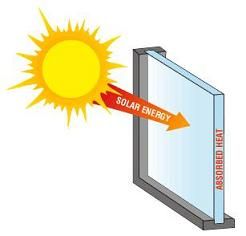
Absorption is a term that is linked to absorb. This verb can refer to different issues: the damping exerted by a body in the face of radiation that passes through it; to the attraction developed by a solid on a liquid with the intention that its molecules manage to penetrate its substance; to the capacity of a tissue or a cell to receive a matter that comes from outside.
The notion of absorption (from the Latin absorptium) also has broader uses. It may be something that is consumes or it is spent in full. For example: "The company has already absorbed all its capital", "This case absorbs all my strength".
Absorption can also be the action of attracting ("His speech absorbed the attention of everyone present") or, applied the notion to a business, when acquiring or incorporating another ("Megachip absorbed the operations of its rival Conductronic").
On chemistry, absorption is a process that separates the components of a gas from the inclusion of a solvent in liquid state, with which it creates a solution.
For the physical, absorption is a decrease in the intensity of radiation that passes through a body.
It is known as digestion, on the other hand, to nutrient absorption procedure that takes place when eating food; Several types of enzymes act in it that separate those elements that can be used to be transformed into energy and collaborate with the normal functioning of the organism. This process is possible thanks to different interconnected organs (digestive system) where each one fulfills a function to give the body the nutritional supplements to live.
It should be noted that within the digestive process there are several stages: ingestion(food enters the body through the mouth), chemical and mechanical digestion (the food is crushed and bound to acidic substances secreted by the salivary glands and becomes a food bolus to pass through the rest of the organs of the digestive system), absorption (the nutrients pass through the osmosis the digestive system to the different areas of the circulatory and lymphatic system) and excretion (elimination of materials that have not been digested outside).
Another use of the term absorption appears in linguistics, where it designates the phenomenon that arises when a vowel is incorporated into the sound of a consonant and, therefore, disappears.
Differences between absorption and adsorption

Regarding the definition of the term from physics, we can say that absorption is a process in which certain elements, such as molecules, atoms or ions pass from one state or phase to another, forming a Body or material with different characteristics. It also refers to radiation that, despite lacking volume, can be absorbed, joining the body that attracted it.
This concept is often confused with adsorption and, even, many times they are used interchangeably; However its meaning is diverse.
The term adsorption refers to a physical-chemical process in which certain elements (atoms, ions and molecules) are retained on a surface solid; it has a substance that allows it to attract these elements and create stronger chemical bonds from them.
The difference between both concepts lies in the fact that for absorption to occur the elements must be transferred from one place to another through an absorbent type material, while in the case of adsorption, are retained (except for the radiation, which is not included) on a surface with attractive force.
Leave a Reply