
The 7 types of dentists (dental specialties)
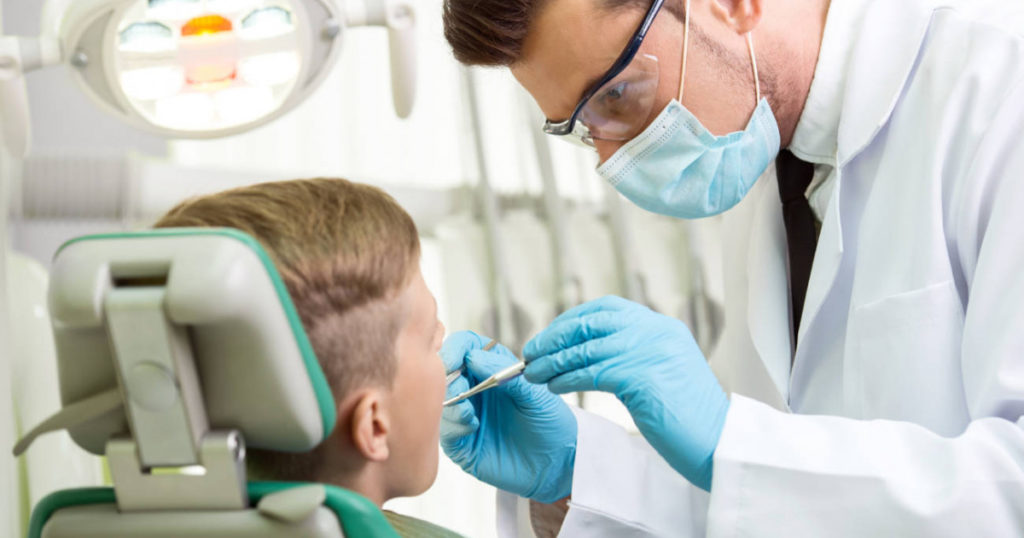
Taking care of our teeth is essential to enjoy good health. Taking care of our oral health is essential not only for an aesthetic issue, but also for health. Dental check-ups are much more than just periodic cleanings, since the dentist's role is very broad. Frequent visits to the dental professional can detect cavities in their early stages of development, thus avoiding additional damage and overly complex treatments.
We can also know if we suffer from pathologies in our gums, since some are especially difficult to detect if we do not go through the eyes of a professional. Of course, these reviews are equally crucial to detect more serious diseases such as oral cancer early, this point being especially relevant if you are a smoker.
In addition to treating and detecting pathologies, the dentist is also a figure that can help us to adopt healthy oral hygiene habits. Thus, we can prevent the appearance of many preventable oral problems, but also many other medical conditions. We cannot forget that the mouth is a gateway to our body, so poor health can have its origin, precisely, in our oral cavity.
Some studies have found revealing relationships between the state of the gums and diseases such as diabetes or heart disease. Although most of the bacteria that live in our mouth are harmless, when hygiene is not adequate, they can grow uncontrollably and cause infections and diseases. Therefore, the figure of the dentist is much more relevant than we think. However, there are many different types of dentists. In this article we are going to review the types of dentists you can go to and their respective functions.
What dental specialties are there?
As in medicine, when it comes to check-ups you should go to your general dentist. This can refer your case, if deemed necessary, to a specialist. The visit to the general dentist should be made at least once a year. It is not necessary that you suffer any specific discomfort for this annual visit, because its function is precisely to prevent the appearance of avoidable damages and diseases.
We are going to know what types of dentists exist and what their respective functions are.
1. General dentist
The general dentist is the professional who acts as a gateway to more specialized services in case these are necessary. Sometimes, it is enough for this professional to carry out a routine check-up to assess the patient's oral health status. This will be able to carry out cleanings, restore cavities and carry out other interventions that fall within the normal maintenance of the mouth.
In some special cases, the general dentist may consider it appropriate to refer the patient to another dental health professional who is a specialist in one of the areas that we are going to discuss below. The general dentist is a very important figure for the prevention and promotion of oral health and is very relevant in the early detection of many pathologies. However, their capacities have limits and in patients with certain problems, very specific means and skills that only a specialist can offer will be required.
2. Endodontist
This type of specialist is one who is in charge of treat all pathologies related to the nerves and soft tissues of the tooth, which is usually known by the name of "pulp". Professionals in this specialty must undertake specific postgraduate courses in this area that enable them to intervene in this regard. The treatment applied in this case is endodontics or root canal treatment, which consists of extracting said pulp contained in the tooth to replace it with a material that allows the patient's natural tooth to be preserved.
3. Pediatric dentistry
The name of this professional can give you clues about the direction of their specialty. The pediatric dentist is a dentist who has specialized in dental care and treatment for children and adolescents. This specialty is complex, since the professional must know everything related to the development and growth of the oral cavity and jaw. The interventions of the pediatric dentist can have repercussions on the adult oral health of the person, requiring great skills and technical knowledge.
Beyond his qualities as a dentist, the pediatric dentist must also have good skills to deal with children, as he must transmit tranquility, understanding and apply simple language adjusted to the age of each patient. Its role in prevention is very important, since it can instill healthy habits from childhood to maintain good oral hygiene. The care of children by the pediatric dentist can be given from the first year of life,
4. Orthodontist
The orthodontic specialist is the dentist who pursues achieve good placement and alignment of the teeth and jaw. To do this, the orthodontist applies tools such as wires, braces, and retainers. On many occasions, the orthodontist will have to work as a team with a maxillofacial surgeon, as surgical interventions may be required in the placement process.
The appliances used can be applied to the upper and lower teeth, depending on the needs of the patient. The most widely used are known as "brackets", a fixed appliance that must be placed for a longer or shorter time depending on each case.
Although the use of orthodontics allows to achieve a spectacular aesthetic improvement, the proper placement of the teeth is key to achieving oral health, since the teeth in inappropriate positions can prevent correct oral hygiene, facilitate infections, cause difficulties in eating and even in Can talk. To become an orthodontist, a dentist must complete a two-year college degree.
5. Prosthodontist
The prosthodontist is a professional trained to help those patients who have lost one or more teeth. This dentist is trained to repair teeth and jaw bones. Among its treatments stand out those of an aesthetic type that allow teeth whitening and coating them. In addition, they can also make dentures, bridges, and crowns. In this way, it is a question of returning an adequate oral function to the person, which has implications not only on an aesthetic level, but also on the phonetic and functional aspects.
6. Periodontist
The periodontist is the professional who is in charge of treat and intervene in diseases that affect the gums. Although the general dentist is the one who acts to prevent this type of disease, only the periodontist can perform the necessary treatment to intervene on the pathology. In these cases, it is important that the patient can be treated early, since the diseases that affect the gums are usually progressive.
Although it can address pathologies that affect the gums of natural teeth, it can also work on those that occur around implants. One of the diseases that this specialist most frequently treats is periodontitis, which consists of the accumulation of oral bacteria around the teeth.
7. Oral surgeon
The oral surgeon is a dentist who has the function of surgically treat different pathologies that affect the teeth and jaw. This professional performs dentoalveolar surgeries, performing complex tooth extractions, implantology, jaw surgery and soft tissue surgery of the oral cavity. The oral surgeon is the dentist who must dedicate more years to graduate studies to be able to specialize in his area and perform surgeries on patients.
Conclusions.
In this article we have compiled the different types of dentists or dentists that exist. Oral health care is essential not only for aesthetic reasons, but also for health reasons. The oral cavity is the gateway to our body, so the diseases that occur in it and poor hygiene habits can lead to the appearance of not only oral diseases but of any kind.
The general dentist is the one who is in charge of attending the reviews of routines, performing maintenance interventions and promoting proper habits to maintain good oral health. His role is crucial as a first-line professional, since he can detect diseases of greater or lesser severity early, referring his patient to a specialized dentist when necessary. The rest of the professionals that we have discussed have specific training that allows them to attend to cases with specific needs.
The annual visit to the dentist should be made regardless of whether or not we feel any discomfort, since these controls allow us to keep the state of our mouth under control and prevent avoidable pathologies. Although the smile is an indisputable attribute of beauty, we cannot forget that, beyond aesthetics, health is a fundamental point.
In addition, care to preserve oral health extends to all stages of life, since children from one year of age can already receive assistance from a specialized dentist, known as a pediatric dentist.
Each of the specialist professionals must have meticulous technical skills that allow them to tackle more complex cases. Oral health is a first step towards having a good general state of health, since otherwise we may suffer problems speaking, eating and maintaining a proper cleaning of our teeth.
Leave a Reply