
wave amplitude
Before entering fully into the clarification of the meaning of the term wave amplitude, it is interesting that we proceed to determine the etymological origin of the two main words that shape it:
- Amplitude, in the first place, derives from Latin. Specifically, it comes from “amplitudo”, which can be translated as “quality of extensive”. In the same way, it should be noted that this term is the result of the sum of two components: the adjective "amplus", which is synonymous with "extensive" or "wide", and the suffix "-tud", which is used to indicate quality.
-Onda, on the other hand, is a word that comes from Latin, exactly from “unda”, which is equivalent to “wave”.
The notion of amplitude it can be used to name the lengthening, stretching or widening of something. Is named wave, on the other hand, to the propagation movement carried out by a fluid, to the elevations formed by the disturbance of the surface of a liquid substance and to the way of propagation that magnetic and electric fields have in space.
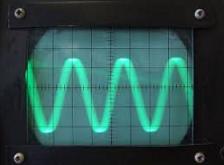
The concept of wave amplitude appears on the ground of the physical and is linked to highest value that registers a variable, measured from the midpoint or equilibrium. In an electromagnetic signal or in a wave motion, the wave amplitude is the distance that exists between the maximum value (the highest point of the wave) and the equilibrium point.
The wave amplitude can be seen in a graphic with a sinusoid curve in Cartesian coordinates. If we take the X axis As a midpoint, the wave amplitude will be given by the space that exists between the highest point in the Axis y that plays the sinusoid and the aforementioned X axis.
A physical disturbance, in this way, can be graphed in a model as a magnitude whose value changes over time. The wave amplitude is observed when analyzing the values according to the points occupied by the disturbance (plotted as a wave) in the space.
In the case of sound waves, the wave amplitude reveals the distance between the peak of the wave (the highest value) and its base, measured in decibels. As the wave amplitude increases, the decibels increase, reflecting an increase in the intensity (the volume) of sound.
There is another important series of aspects to know about the aforementioned wave amplitude. Specifically, we can underline that the units to measure it will vary depending on the type of wave we are referring to:
-When it is a wave of mechanical class, it will be resorted to the use of what are the units of length to measure it.
-In the case that you are working with an electromagnetic wave, what will be done to measure the amplitude will be to use a unit that responds to the name of candelas.
-If, on the other hand, we are referring to alternating current waves, we will resort to using amps and volts in their measurement.
-When we are dealing with sound waves, what we will do is choose to opt for what are units such as the millibar, the pascal or the set of remaining units.
Leave a Reply