
warning

Warning is the action and effect of warning (call attention to something, advise, prevent). When someone tries to give a warning to another person, is intended to warn you about something in particular. For example: "It is not a threat, it is a warning: if you hurt my daughter, you will deal with me", "Luckily I heard the warning from my friends and I did not accept their proposal", "If you want to work in this company for many years, you should heed my warnings".
The warning is also the poster or brief writing in which something is warned to the public. It is a sign that warns about the imminent or real existence of a threat, a risk or a danger. Warnings also indicate to your recipient that a certain action of yours may be risky or penalized.
Many road signs can be considered as warnings. If the sign indicates that the maximum speed allowed is 80 kilometers per hour, the sign is warning that whoever exceeds this speed will be fined. In a similar sense, the contramano poster warns that it is not possible to advance in a certain direction; if you do, the driver will be in violation.
When it comes to browsing Internet, users come across various warnings that point out risky web pages, files infected with virus or content not suitable for minors.
Records, movies and magazines, among other works, display warnings about the type of content (suitable for all ages, prohibited for minors under 18 years, etc.).
Miranda Warning
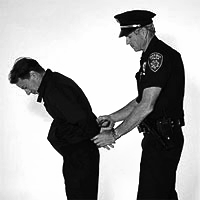
It is called Warning (of) Miranda or Miranda Rights when notice that must be received by every US defendant who is led to testify regarding the carrying out of a crime of which he is considered a suspect. Is about remind you that you have a constitutional right not to say a word and to require the assistance of an attorney during questioning.
The data What the police can demand from a detainee are his name, address and date of birth. Any confession you make while in detention has no validity in court, unless you have been aware of your rights before making it and you have made sure you understand the Miranda Warning.
The origin of this concept dates back to 1963, when a man named Ernesto Arturo Miranda was arrested for kidnapping and rape. The story He says that Miranda confessed to his crime without having received any kind of warning about the rights guaranteed by his Constitution, and that the prosecutor only used that confession to obtain his conviction.
Three years later, the Supreme Court reversed the sentence, based on the theory that Miranda's statement had been a consequence of the intimidation during questioning. Therefore, the criminal was subjected to a second trial, for which the prosecution had to gather evidence of legal validity, and have the presence of witnesses to support the accusation. Finally, Miranda was sentenced to 11 years in prison.
Some time later, the rapist was stabbed to death in the middle of a violent confrontation; his murderer received the pertinent reading of the Miranda Rights, on which he relied not to offer a statement without the presence of a lawyer.
The ruling issued by the Supreme Court indicates that every individual in custody should be warned about their right to remain silent and, very importantly, to know that any statement you make during your detention can be used against you at the time of trial. In the same way, they must tell you that if you do not have the financial means to hire a lawyer, the State has the obligation to bear the necessary expenses for your defense.
Leave a Reply