
Traditional agriculture
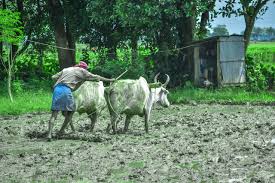
Traditional agriculture is the main agricultural production model of different societies throughout history. It is characterized by its little technological influence and the care of nature.
Since its beginnings in the Neolithic era, the practice of traditional agriculture has meant a productive model and a way of life for the social communities that have exercised it.
With few technical elements and a deep understanding of nature, the different civilizations of the world have obtained food through cultivation, while creating exploitation as a way of obtaining wealth.
In that sense, traditional agriculture has for centuries been a rudimentary mode of work based on human capital.
Value of traditional agriculture
Traditional agricultural knowledge and practice have been perpetuated generation after generation. Thus, they have been territorially formed as an element of rural subsistence.
The appearance of excess production, or surpluses, resulted in the creation of first incipient examples of trade between different communities, after establishing the division of labor by the surplus produced.
Characteristic elements of traditional agriculture
Throughout its many centuries of evolution, the most traditional agricultural production has consolidated a number of key factors:
- Attending to a small and medium product demand. Usually, the agricultural activity was aimed at the simple supply of families or small regions.
- It integrates very rudimentary agricultural techniques and machinery. From the human labor factor to the use of pack animals make up this methodology.
- The passing of the centuries has given rise to the treatment of different materials for the creation of work tools. With metal, wood or bone axes, sickles or reapers have been configured.
- It is closely dependent on weather conditions or the composition of the inhabited land.
- Operation together with the cattle work. Agriculture and treatment of animals, by way of grazing or farming, have been interconnected for mutual benefit, as exemplified by treatment with manure as a fertilizer substance.
- Facilitates diverse and varied production due to polyculture. Faced with more modern trends such as monoculture, the traditional practice benefits when it comes to undertaking a greater range of products.
Evolution of traditional agriculture
Due to the demographic growth experienced throughout history and the technological and technical advance in the framework of agricultural production, traditional agriculture has been progressively adapting.
As a result of this evolution, other contemporary modalities have appeared up to the most advanced commercial and modern model of agriculture. The latter prioritize elements such as achieving optimal production and guiding efficiency.
However, some agricultural productions try to maintain the more traditional values and approaches. An example of this is the existence of types of agriculture such as family or subsistence.
Leave a Reply