
Price adjustment
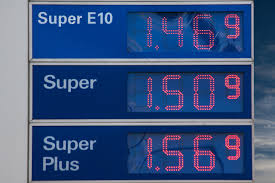
A price adjustment is an alteration of the price levels that a company that offers products in the market undertakes. It can be conditioned by inflationary reasons or by strategic decisions.
By means of a price adjustment, a commercial company can use the price as an instrument of signaling or of influence in the demanders of its products.
In a free market and trade environment, companies have the ability to adjust the prices of their products according to various criteria.
Through a change in a price, new consumers may be attracted to them, either by being lower or by establishing a situation of scarcity or distinction, for example.
Causes of a price adjustment
Although there can be many reasons for companies to alter the prices of the goods and services they offer to the public, most of the adjustments are caused by increases in production costs.
The very effect of inflation causes the cost of raw materials, employee payrolls or energy costs to rise periodically. Thus, the profit is reduced, which makes companies seek to maintain their profitability ratios.
On the contrary, there may also be downward adjustments in prices. Many of them are the consequence of the receipt by the company of subsidies or aid for production, the discovery of new resources or the proliferation of technology.
This type of progress or the assumption of new competitive advantages favors that a company can afford to reduce the prices of its products without fear of suffering losses in profitability or viability of its economic activity.
All that said, there are often two main causes that motivate price adjustments:
- Adjustments due to inflation.
- Adjustments due to strategic decisions.
Price adjustment and elasticity
An important related aspect is the elasticity of demand relative to products. In other words, there are certain goods or services that have a more inelastic demand. What does it mean that the demand is inelastic? It means that large changes in prices mean small changes in the quantity demanded.
An example of this is the market for tobacco or gasoline.
On the other hand, most markets have elastic demands, where the price of goods largely determines their greater or lesser success. There are also a large number of competitors in them.
Price adjustment strategies
Given the circumstances of price adjustment described above, companies have a wide variety of alternatives when setting a price in the market in which they operate.
Following the main objective of maximizing its economic profit, a company is able to make strategic decisions about the price to make itself more attractive compared to its competitors. However, you can also aim to gain market share.
From a global perspective, for this, there are market instruments such as discounts, supplements and compensations or the setting of prices according to geographic, population or market segment criteria.
Leave a Reply