
pathogenic agent
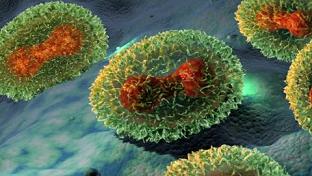
The term agent it can be used in different ways. In this opportunity, we are interested in keeping its meaning as that which has the ability to act or produce something. Pathogen, on the other hand, is an adjective that qualifies what causes a disease (a variation of the state of health).
It is interesting to know the etymological origin of the two words that give meaning to the term that now occupies us:
-Agent derives from Latin, specifically from “agentis”, which can be translated as “the one who carries out the action”. It is the result of the sum of two differentiated elements: the verb “agere”, which is equivalent to “act”, and the suffix “-nte”, which is used to determine who performs the action.
-Pathogen, on the other hand, has Greek roots and means "that produces disease." This word is composed of two clear parts: the noun "pathos", which is synonymous with "disease", and "geno", which is equivalent to "produce" or "engender".
The notion of pathogenic agent refers to an element that can to provoke a disease or a organic disorder yet Guest. It should be noted that the organism that carries or harbors another organism is called a host.
Therefore, the pathogen lodges in a host and causes some kind of damage to it. A virus, a bacterium or a fungus they can act as pathogens through different infectious mechanisms. Guests can be Humans, animals or plants.
The protozoan Toxoplasma gondii, for example, it is a pathogen that can be hosted in a cat and provoke him toxoplasmosis, a disease that spreads to people. In this case, the cat becomes a host for the pathogen Toxoplasma gondii and causes the contagious disease called toxoplasmosis. Once the cat acquires toxoplasmosis, it can defecate and transmit the parasite to people.
Another example of a pathogen is Corynebacterium diphtheriae, a bacterium bacillus type that lodges in humans and causes diphtheria. This disease causes the development of false membranes in the throat, nose and skin, causing pain, increased temperature and injuries of different kinds. There is a vaccine that prevents diphtheria infection.
That without forgetting another example such as bacteria Clostridium tetani, which is what is considered responsible for tetanus. Its way of acting is to "enter" the body through a wound and then, once inside, release a toxin.
In the same way, we cannot ignore that nematodes are also considered to be pathogens. In their case, they are responsible for causing different diseases in what are the plants.
These have the shape of a small worm, they feed, as a general rule, entering what are the roots of the aforementioned plants and once there they “devour” what the cellular content is. To counteract them, there are currently numerous insecticides and similar chemicals, which are responsible for preventing these living beings from dying or suffering serious damage from these pathogens.
Leave a Reply