
mating
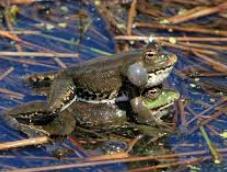
It is called mating to the act and result of mating, a verb which can refer to different issues: bringing males and females together to have a young, bringing two elements together to form a pair or arranging different objects so that they are the same.
If we focus on the field of biology, the notion of mating encompasses behaviors and the Actions that two specimens of different sex carry out for the development of the procreation. Mating, in this context, ends in the copulation.
It is important to note that before reaching this last step, which consists of the action that the male performs to inseminate the female, which is usually described by the term penetration, mating is a broader set, in which we also find the different forms of courtship.
Courtship is a process that begins with the selection of an individual in order to maintain intimate relationships with him, and the subsequent behavior to attract him. Although at present this term is used especially to speak of species animals, it is also carried out by humans.
The animal species, to reproduce, develop mating in a natural way. However, in some cases, the man intervenes in the reproduction and put aside that mating. This occurs when appeal is made to the artificial insemination cattle, for example. In these cases, the animals do not mate to have young.
It is known as mating system to the structuring of sexual behaviors. The links can occur within the framework of monogamy or polygamy, depending on the species. In the case of human being, the mating system is very broad since there are multiple types of relationships. Humans also tend to develop sexual relationships without reproductive purposes.
The idea Mating also appears in other areas that are not linked to sexuality. The base pairing is an interaction established by the nitrogenous bases and that allows the hybridization of ribonucleic acid (RNA) and deoxyribonucleic acid (DNA).
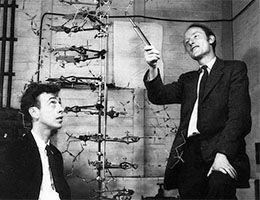
To achieve the emergence of such folded or hybridized forms of nucleic acids, it is necessary that certain well-defined regions interact. Known Scientists Francis Harry Compton Crick Y James Dewey Watson, hailing from England and the United States respectively, modeled a Pattern of mating in which you can see the guanine-cytosine, adenine-thymine interaction, which results in the double helix structure of deoxyribonucleic acid.
Another thing that arises from the complementary nature of this pairing is the mechanism of transcription and replication, two processes fundamental for the processing and transfer of genetic information. This phenomenon can be both intramolecular and intermolecular; For example, the pairing of single-stranded RNAs takes place intramolecularly, between parts of a single strand that complement each other, while the bases of a DNA strand do the other way, intramolecular, with those of the strand that complements them.
The interactions that can be seen during base pairing are governed by the bonds of hydrogen. Stability can only be obtained if the pairs have an adequate degree of geometric correspondence. Over the decades since the first observation of base pairing, scientists have discovered several types; In addition to the aforementioned by Watson and Crick, the Wobble, the Hoogsteen and the one with sugar oriented in trans or cis stand out.
In graph theory, the pairing is the group of edges that lack shared vertices in a graph.
Leave a Reply