
Mathematical analysis
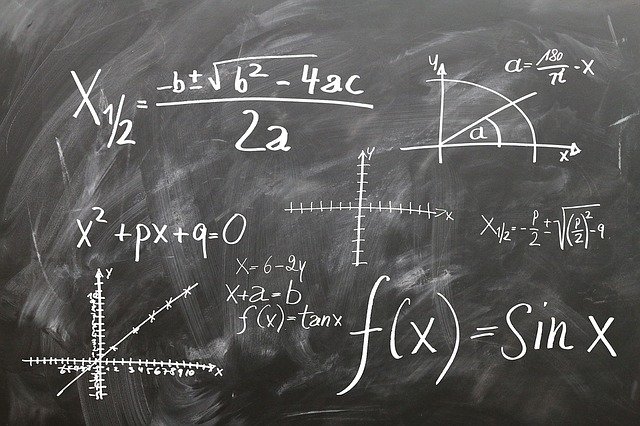
Mathematical analysis is a branch of mathematics. This focuses on the study of real and complex numbers, as well as their representation; even using letters.
Mathematical analysis, in particular, addresses topics such as derivatives, integrals, limits, series, and various types of complex functions.
The purpose of mathematical analysis is to solve complex calculations through abstraction. To do this, it uses tools such as functions.
History of mathematical analysis
The history of mathematical analysis dates back to classical Greece. The mathematicians Eudoxus of Knidos and Archimedes used, although without developing them in a formal way, concepts such as limit and convergence. This, to calculate the area and volume of geometric figures.
Later, in the 12th century, the Hindu mathematician Bhaskara developed elements of the differential calculus. Then, in the 14th century, another Hindu mathematician named Madhava devoted himself to the study of various types of mathematical series such as infinite series, power series, and Taylor series.
Over time, in the seventeenth century, what some consider to be the true origin of mathematical analysis occurred. All this, after the appearance of developments such as those of Isaac Newton, Gottfried Wilhelm Leibniz and Pierre de Fermat in the area of calculus.
Thus, in the 18th century, advances continued with other topics such as differential equations, highlighting, already in the 19th century, figures in this field such as that of the mathematician Augustin Louis Cauch, Siméon Denis Poisson, Jean-Baptiste Joseph Fourier, Bernhard Riemann , Karl Weierstrass, Richard Dedekind, Camille Jordan and René-Louis Baire.
With all this base, in the 20th century, Henri Léon Lebesgue, David Hilbert and Stefan Banach stand out. These last two were dedicated to the study of vector spaces.
Areas of mathematical analysis
Mathematical analysis covers the following areas:
- Real analysis: It is the study of derivatives and integrals, as well as limits and series. It includes differential equations, differential geometry, probability theory (branch of mathematics that studies random events) and numerical analysis (branch of mathematics that studies the methods to obtain the approximate solution to a problem).
- Non-real analysis: It is the analysis of bodies that are not real numbers. For example, complex numbers. In other words, those that can be represented as the summary of a real number and an imaginary number.
- Functional analysis: It is the branch of mathematics that studies the space of functions. This is a set of functions from a set A to a set B.
- Topology: It is the branch of mathematics that studies the properties of geometric figures or bodies, whose properties do not vary when they are contracted, dilated or deformed.
Leave a Reply