
abstraction
From Latin abstractio, the concept abstraction is linked to the verb abstract (separate the properties of an object through a mental operation, stop paying attention to the sensible world to focus on a thought). Abstraction, therefore, is one of these actions or their effects.
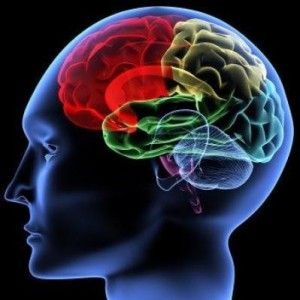
For the philosophy, abstraction is a brain activity that allows to isolate, at a conceptual level, a certain quality of something with the intention of giving oneself to a reflection on it without considering the rest of the properties of the object in question.
When, thanks to these thoughts or the action of comparing between different things, it is noticed that the isolated quality is common to several, it is said that the object subjected to abstraction is a universal. The discipline that is dedicated to investigating the existence, or not, of the universals separated from their reflection, is the metaphysics.
It is known as abstract artOn the other hand, the style that does not try to reproduce the forms of nature or other models, but focuses on the characteristics of the structure, shape and colors of the work itself. This style developed as a kind of opposition to realism and photography.
Within abstract art it is possible to highlight abstract expressionism, a movement in painting that had its origin in the decade of the '40 in the United States. Among its main characteristics, its preference for oil (and not canvas) and for large formats can be pointed out.
In the art, abstraction arises in the twentieth century at the beginning of a new trend in which explore new ways. Until then, works of art imitated nature with its landscapes, people and objects that inhabit it; It was believed that the more a painting resembled the reality, the more perfect it was. The abstract painting It is based on the elements of nature but is not governed by any norm; the artist manifests his inner world and art becomes something absolutely subjective. In this period, art is characterized by transmitting feelings, using the mixture of colors without limits and in the same way the geometric formsIn a word, art is liberated.
In 1964 the post-pictorial abstraction, as the successor to Abstract Expressionism. Who first mentioned the term was, Clement Greenberg, to describe an artistic style that rejected gestures and applied uniform color, but without the desire to convey a message a priori. Furthermore, the painting occupied very large surfaces and should not be justified with ideas or feelings, it was its own justification. From this current the minimalism who sought a more basic formal and chromatic approach than previous trends.
Different levels of abstraction
In regards to abstraction as reasoning ability, it is the one that allows to separate objects into parts and understand the essentials of each one of them. According to Jacques Maritain, to understand the fundamentals of the speculative sciences, it is necessary to investigate the domain of science in its hierarchy and divisions, which can be differentiated according to the degree of intelligibility (that which can be understood) that the objects of knowledge possess in them.
 For his part, Saint Thomas Aquinas was convinced that intelligibility develops in parallel with immateriality, and that is why things of a material nature are more understandable than spiritual things; Despite this, the higher questions of knowledge have to do with the spiritual knowledge.
Abstraction is a process that develops on three levels:
First degree abstraction: It is known as abstraction formal. It allows knowing the mobile and sensitive matter that forms abstract objects and capturing them in a broad way. At this level, intelligence understands the essence of the object, its matter (with rare exceptions, all things are made up of matter). In ancient times this part of the process was called physica, that is, physical.
2nd degree abstraction: Known as the abstraction of the sensitive matter. Analyze the number, quantity or extent of the matter that makes up the object; it is imaginary and necessary to understand the operation of the object. The difference between this degree and the first is found in the immateriality of this second. It is the world of the extension and it is solved through the numbers, that is, the math.
Third degree abstraction: Known as abstraction of all matter, that which is separated from matter and from the numerical in an object. This level is about "being as such," that is, about the world of Being and realities that are not material, such as spirit. It could be said that this essence takes advantage of matter and its numerical qualities to manifest itself and that this aspect of essence can only be understood through the metaphysics.
Leave a Reply