
Leverage
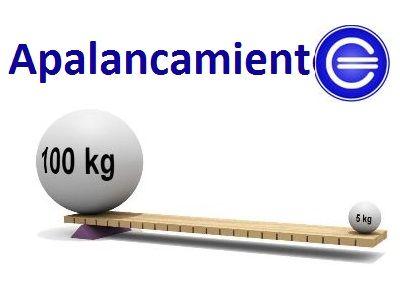
Leverage is a strategy used to increase the profits and losses of an investment.
It consists of using credits, fixed costs or any other tool when investing that allows multiplying the final profitability of that investment, either positively or negatively.
A higher degree of leverage carries higher risks. Thus, although profits can be greatly increased, by making use of this leverage effect, losses can also be considerably increased.

The term "leverage" comes from leverage. A rigorous definition of leverage according to the RAE is: “lift, move something with the help of a lever”. As we are going to see, this concept is not very far from what the word leverage means, which uses debt or fixed costs as a lever to increase investment possibilities.
Types of leverage
When a company invests in machinery it is using leverage. Similarly, when a person uses a loan to buy a house or when an investor borrows money to invest in the stock market, they are using this strategy.
The first known case is operating leverage while the other two cases are financial. Let's see briefly what each of these two types consists of:
- Financial appeceament: It consists of using debt to increase the amount of money that we can allocate to an investment. It is the relationship between equity capital and credit used in a financial operation.
- Operating leverage: It consists of using fixed costs to obtain a higher profitability per unit sold. It is the relationship between fixed costs and variable costs used by a company in the production of goods.
Example
An example of leverage would be that of a company that goes into debt to undertake a project. It is leveraging itself because it does not invest with its own capital, but with external resources.
If the company, instead of going into debt, made a capital increase to carry out this project, it would also get the necessary money, but it would not be leveraging.
Leave a Reply