
feint
The etymology from feint could come from gothic af-maga, which translates as "desert", as indicated by the Royal Spanish Academy (RAE). This word, in turn, derives from magan (translatable as "have strength").
The act of feint Alludes to make the gesture of doing something, but without specifying it. The threat allows to show the intention to specify an action in the short term, being able to function as a threat or by way of cheated.
For example: "After threatening to hit his neighbor, the man calmed down, sat down and agreed to talk", "There is no point in threatening to resign: if you want to leave, do it directly and do not waste time", "Despite feigning not to abide by the coach's decisions, the player finally made himself available to the coaching staff".
Take the case of someone who threaten with hit to another person. Your idea is frighten the other, but in reality he is not willing to carry out the attack. What he does is feint by raising his arm and moving it as if he were about to launch the blow.
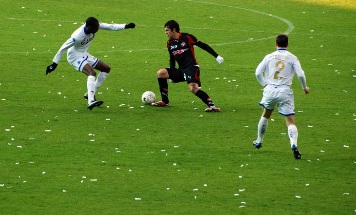
Faking is a frequent practice in the field of sport. If we focus on the football, who advances with the ball can pretending that he is going to make a pass or that he will kick at goal with the objective of confuse the defender.
In the basketball or basketballFake is useful for the defender to jump or move: thus, if the fake or fake is effective, the player with the ball can shoot unopposed, increasing the chances of scoring.
Leave a Reply