
digital art
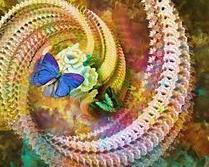
It is called art to human expression that allows to reflect a representation of reality or something imaginary. Digital, for its part, is an adjective that can be applied to the system that works with information encoded in discrete and binary signals (which can take two values, generally represented by the numbers 0 Y 1).
The concept of digital artIn this context, it is usually a matter of debate. Digital art is generally considered to be that created through the use of computer tools. A work developed with a computer (a computer), therefore, is a manifestation of digital art.
There are those who associate digital art with dematerialization of the plays, in the sense that they are not tied to a material support and that they can even be accessed virtually. The works, on the other hand, would not require the direct use of physical instruments. Following this reasoning, digital art develops in Internet.
Another position links digital art to options for interactivity. Unlike most conventional works, this artistic branch encourages the recipient to get involved, participate and even get some kind of response or reaction by the work in question.
Taking into account all these ideas, we can affirm that a painting created with a software, a tale based on the use of hyperlinks and a three-dimensional sculpture that is projected by a computer are some examples of expressions of digital art.
In addition to all the above, it is worth knowing another series of relevant data about digital art, such as the following:
-One of the main aspects to highlight of it is that it allows to create alternative worlds and that it comes to break in a forceful way with what is the classic representation of everything that surrounds us.
-It is considered that the first exhibition of this type of art took place in the 1950s. Specifically, it was an exhibition from 1953 at the Sanford Museum.
-Within digital art there are many types and modalities. Among the most significant are three-dimensional or 3D art, Pixel Art (where editing software is used), airbrushing (digital airbrush), digital photography and digital sculpture.
-German George Nees is one of the first scholars, theorists and artists of digital art. It is considered that he made his first exhibition in 1965, on graphics made with a computer.
-The North American Laurence Gartel is another of the figures that is considered important within the art that we are addressing. He used his computer to shape new artistic works and even to retouch his own photographs.
-The Swiss Yves Netzhammer is illustrious in the field of digital art because he has played an essential role when it comes to the creation of three-dimensional animations.
-Margaret Eicher, Myron Krueger or Vera Molnar are other personalities who have left an imprint within the aforementioned digital art.
Leave a Reply