
avionics
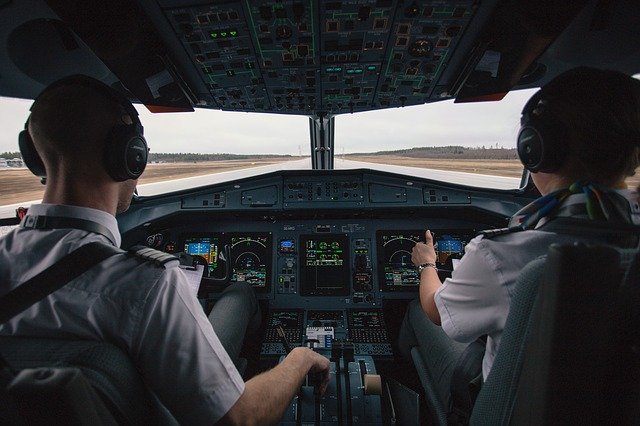
It is called avionics to application of the knowledge and resources of the electronics to aviation. The term comes from the English word avionics.
As you can see, to understand what avionics is, it is essential to understand the concepts of electronics and aviation. The electronics is the study and use of the behavior of electrons in various media when under the influence of magnetic and electric fields. The aviationMeanwhile, it is air transport that is carried out with vehicles that are heavier than air.
When electronics is applied to aviation, we talk about avionics.
What is avionics
Avionics is related to the development and implementation of electronic systems in planes, helicopters, spacecraft and artificial satellites. These tools favor management, navigation and communication.
The development of avionics is linked to the advancement of computer science and various branches of the technology. Little by little, analog and mechanical instruments were replaced or supplemented by digital tools that improved safety and revolutionized the work of pilots.
A historical tour
The birth of avionics as a concept occurred in the decade from 1970 from the requirements of the military aviation. The need to integrate the various independent mechanical systems of the aircraft was one of the starting points.
Avionics soon entered the field of the civil Aviation. Currently, a large part of the cost of building airplanes and helicopters corresponds to avionics. The application of electronics to aviation has made it possible to create navigation and control systems that offer great precision.
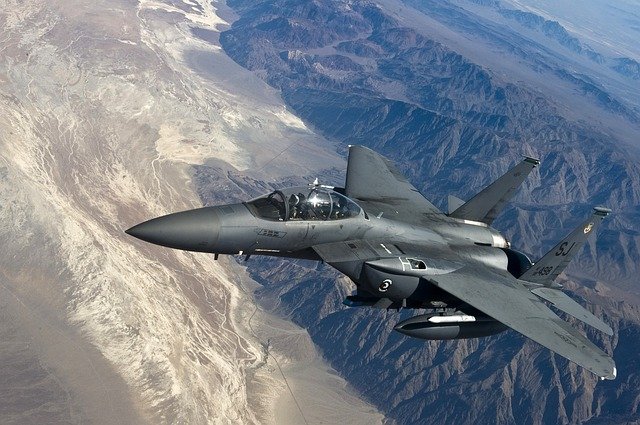
Military aviation was key in the development of avionics.
Avionics and Flight Management Systems
One of the advances brought about by avionics is the implementation of the flight management systems or FMS (from the English expression flight management systems). These systems They automate many tasks that must be carried out on a flight, thereby minimizing the work that the crew has to complete.
A FMS appeals to various sensors to determine the position of the aircraft and can also guide it. In this way, avionics enable the aircraft to follow an already established route.
Fly-by-wire flight control systems
The interaction that a pilot establishes with the flight controls is governed by the so-called flight control systems. With avionics, the transmission of orders from the pilot at the controls it stopped being mechanical and became electrical.
This is how the systems appeared Fly-by-wire (FBW), which have a Interface electronics. Although the command is transmitted by an electrical signal, the flight control continues to act through mechanical means.
Another advantage of FBW systems is that they allow computers automatically send signals for actions without pilot intervention. Therefore, the system can take care of stabilizing the aircraft, to mention one possibility.
It is important to indicate that, as a measure of security, FBW systems have a mechanical backup system. With this arrangement, the aircraft can continue to fly without problems if an electrical failure occurs.
Leave a Reply