
arrhythmia
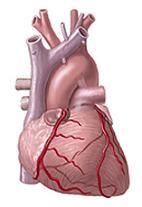
The concept that we are going to address is made up of two parts that have their etymological origin in Greek. These two parts are the following: the prefix “a” that means “without” and the term ρυθμός that can be translated as “rhythm”. Therefore, starting from this qualification, we could say that arrhythmia is synonymous with “no rhythm”.
The arrhythmia refers to the lack of a steady or regular rhythm. In the field of medicine, arrhythmia involves a disorder in the heart systole.
This means that, when contracting to pump blood, the heart makes movements that are irregular and arrhythmic. The structure that is responsible for controlling the heart rate is known as sinoatrial node. From this structure arises the electrical impulse that orders the contraction movement developed by the atria.
Upon reaching the atrioventricular node, the electrical impulse reaches the bundle of His and generates ventricular contraction.
Why is rhythm and proper impulse circulation important? If the contraction of the heart does not take place when this organ is loaded with blood, its distribution to the body will be inadequate. Arrhythmia, in short, is the name given to heart rhythm abnormalities.
In this sense, we can emphasize that when a cardiac arrhythmia occurs in a person, it basically takes place for three reasons. One of them may be because the paths for electrical conduction to occur are altered; another because the necessary electrical impulse has not been produced in the right area; and finally the third reason may be because a failure occurs in the mechanism as a consequence of not having enough momentum.
In addition to all this, it must be added that arrhythmias can be classified according to four clearly differentiated criteria such as their origin (ventricular or supraventicular), their repetition (chronic or paroxysmal), their heart rate (slow or fast) and their cause (pathological or physiological).
In any of these cited cases, the person who suffers them will have a series of symptoms that clearly determine that he is suffering from an arrhythmia. Among them would be found from dizziness to palpitations through loss of consciousness and even chest pain. However, it must be emphasized that, on certain occasions, these symptoms may go completely unnoticed and will only be discovered when the individual in question is subjected to diagnostic tests.
The tachycardia it is an arrhythmia that involves an excessively fast pulse, in which more than a hundred beats are recorded every minute. If, on the other hand, the pulse is slow (with less than sixty beats every sixty seconds), the arrhythmia is known as bradycardia.
In any case of arrhythmia, it is recommended that the person affected, consult a cardiologist. Some disorders require the supply of drugs, others require an artificial device to help manage the rhythm (a pacemaker) and the most serious cases may require cardiac surgery to reverse the arrhythmia and avoid its consequences in the body.
Leave a Reply