
anabolism
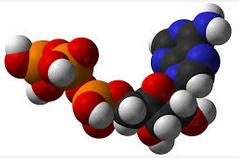
The idea of anabolism alludes to a series of metabolism processes what does the synthesis of different complex molecules through other molecules of greater simplicity. Anabolism, in this way, consists in the synthesis of certain biomolecules from molecules that, in comparison, are simpler.
The process requires reducing power and the development of endergonic-type reactions. The reducing power refers to the transfer of protons and electrons made by the coenzymes, generating the endergonic reaction that supposes an increase in the Energy free for the processes of anabolism to take place.
It can be said that anabolism allows obtain complex molecules starting from simpler molecules in a process that requires the use of energy. Anabolism, in this way, enables the creation of protein from amino acids and the molecules that are needed for the development of new cells.
The opposite processes of anabolism, which in turn are complementary, are called catabolism. Catabolism allows the transformation of more complex biomolecules into simpler ones.
Among the functions of anabolism, we can highlight the following three:
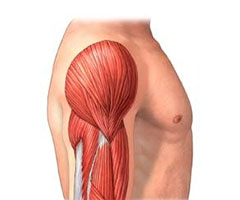
* increase the mass muscular, one of the first to resonate when hearing this term;
* manufacture the body's tissues and cellular components. In other words, it is possible to say that thanks to anabolism growth takes place of living beings;
* storing energy in organic molecules (such as triglycerides, glycogen, and starch) through chemical bonds.
With regard to obtaining energy, cells do so from environment, and for this they use three well differentiated sources, which are the following:
* sunlight, as can be seen in photosynthesis, carried out by plants;
* other organic compounds, a resource that heterotrophic organisms take advantage of;
* inorganic compounds, as in the case of chemolithotrophic bacteria, which can be heterotrophic or autotrophic.
This leads us to the distinction between two types of anabolism: the autotroph and the heterotroph. It is known by the name of autotrophic anabolism to the one that is carried out through chemosynthesis or photosynthesis; the former can only be carried out by some bacteria, while photosynthesis can be observed in algae, plants, photosynthetic bacteria and cyanobacteria. Autotrophic organisms do not need others to subsist; however, they are responsible for the life of heterotrophic organisms.
On the other hand, there is the concept of heterotrophic anabolism, the metabolic process by which complex molecules are formed starting from precursors or simple molecules. It is understood by forerunners chemicals to those substances necessary for the production of others; for example, to form vinegar you need ethyl alcohol, which is considered a precursor of acetic acid.
The origin of the precursors can be: the catabolism that both autotrophic and heterotrophic cells carry out of the reserve substances; the photosynthesis; chemosynthesis; digestion of organic compounds, carried out by heterotrophic cells. It is important to note that anabolism is not an oxidation process, like catabolism, but a reduction process.
In heterotrophic anabolism, a first phase can be seen in which the biosynthesis of monomers takes place and then one in which the biosynthesis of polymers takes place starting from said monomers.
They are known as anabolics or anabolic To them products that increase the intensity of anabolism, favoring development and growth. There are natural anabolics, such as vitamins, and others synthesized in laboratories, such as steroids What are they anabolic androgens (used, despite its adverse effects, by athletes who want to gain muscle mass).
Leave a Reply