
ammonia
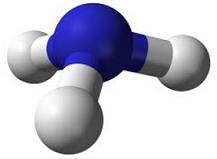
A Greek word passed into Latin as ammoniăcum and then it came to our language as ammonia or ammonia: both accents are accepted by the Royal Spanish Academy (RAE). Ammonia is a gas that is made up of three hydrogen atoms and one nitrogen atom, its chemical formula being NH3.
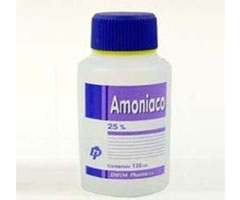
East gas, which can be dissolved in water, lacks color and is characterized by its unpleasant and pungent aroma. It should be noted that the solution of ammonia in water at 35% is also known as ammonia.
Ammonia is produced Natural way by the action of bacteria in the soil or in animals and plants that are in the process of decomposition. Even, in reduced quantity, it is present in the atmosphere. It can also be obtained at an industrial level.
Among the different uses of ammonia –which is usually marketed in a liquid state–, is the production of fertilizers, paper, plastic, cleaning supplies, explosives and refrigerants. On the other hand, ammonia is used in the treatment of textile fibers and wood, as fuel and even in food products to prevent the emergence of microbes.
Although the toxicity of ammonia is low, if it appears in a very high concentration it can cause irritation in the skin and throat, as well as eye and respiratory disorders.
If the necessary precautions are not taken when using ammonia, it is possible that its passage through the respiratory tract causes intoxication; likewise, the Contact Directly on the skin can cause adverse reactions, ranging from bluish lips to severe burns, depending on how long the product remains on the body.
It should be noted that, as a product of the metabolism of amino acids, ammonia is present in the human body. The liver is responsible for transforming ammonia into urea through various reactions.
When the liver is not working properly, the presence of ammonia in blood can grow to cause a hyperammonemia. In this particular case, there is also talk of ammonium, a cation that is formed through the protonation of ammonia; it has a positive charge, its molecular weight is 18.04 and it is polyatomic.
In the field of chemistry, we understand by protonation the process that consists of combining a proton with an ion, a molecule or an atom to form a single resulting body. Many consider it the most important chemical reaction, since it is part of a large part of the fundamental processes. Molecules and ions that are able to go through protonation more than once are known as polybasic.
Retaking the disease called hyperammonemia, it is a problem that can seriously hinder the development of people, with special damages for newborn babies. Among the easiest to detect symptoms of hyperammonemia are vomiting, lethargy (abnormal sleepiness that occurs due to some disorder; in this case it can last until leading to seizures) and diarrhea.
To detect the presence of this disease, doctors carry out a serum determination of the aforementioned ammonia cation, ammonium. If this first evaluation is positive, then it becomes necessary to carry out tests for the determination of its etiology (the causes of the disease), and among them are the following: coagulation; liver function; computed axial tomography (TAC) abdomen; liver ultrasound.
If, once these tests have been carried out, the doctors could not find the etiology, then it is possible that the patient has an abnormal metabolism from birth; to be sure of this condition Glutamine, citrulline, and arginosuccinic acid must be determined in urine and serum.
Leave a Reply