
Alienation according to Marx
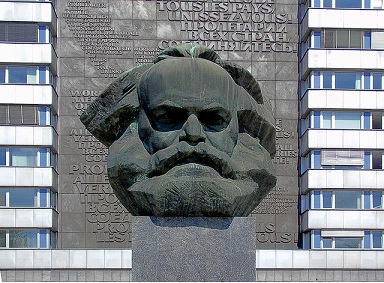
Alienation according to Karl Marx is the separation of the worker from the object he is producing. Thus, both are treated as distinct entities.
In other words, alienation is the process by which the employee becomes something other than the product of his work, which is transformed into a commodity.
Marx explains it as follows in the work where he raises this theory of alienation, "Economic and Philosophical Manuscripts" of 1884: "The object that work produces, its product, confronts it as a strange being, as a power independent of the producer«.
Marx then points out that, from alienation, the worker loses control over the fruit of his effort, becoming an object that will serve to provide a benefit to the capitalist.
Consequences of alienation
Marx warns of various consequences of alienation. In the first place, the work of the worker becomes a commodity that is alienated (sold). Thus, the person performs a task in exchange for a salary.
The second is that the product of the worker's effort becomes controlled by another, and is transformed into private property (which the capitalist owns to usually sell it).
At this point, Marx emphasizes the fact that whoever produces a commodity, despite the fact that it is the result of their work, has to pay for it to possess it.
Then, another important point that Marx alludes to is the disconnection between the worker and his activity, even on an emotional level. Thus, the person will not feel the work activity as their own, but as something alien that also does not give them satisfaction, but rather implies a sacrifice.
Marx also goes so far as to affirm that, due to alienation, the individual does not feel happy with his work. So, avoid him as much as possible, taking refuge in other tasks.
In short, labor activity, according to Marx, becomes something that does not belong to the worker, and only serves as a means to obtain money with which to consume.
Alienation and ideology
Marx makes a parallel between the worker-capitalist relationship with that formed between a person and his god. In the second case, the individual hands over part of his effort not to a capitalist, but to a divine entity.
Likewise, it should be noted that alienation is not limited to the patrimonial or labor, but it is transferred to the ideological and political plane with implications in the way in which it is understood that the economic system should function. This, because the workers themselves, Marx observes, end up being convinced that the capitalist has the right to appropriate the goods they produce.
Leave a Reply