
airport
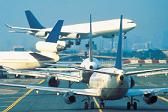
A airport is a station or terminal located on a flat land that has tracks, facilities and services for the aircraft traffic. Airports allow passenger or cargo aircraft to take off and land, as well as provide fuel and maintenance for them.
The most important airports have several paved runways of more than one kilometer in length, auxiliary streets, warehouses, maintenance hangars, boarding terminals and platforms parking. There are, however, smaller airports whose runways have been delimited on the earth itself.
The area control center it is one of the most important sectors of an airport. There the air traffic controllers, which must direct and manage the movement of aircraft to avoid collisions and other accidents.
The construction of an airport is complex and must attend to various factors. The meteorological conditions of the region in which they are located are decisive since airplanes must be particularly careful with the winds when taking off or landing. It is common for airports to be built away from urban centers, for reasons of safety.
Beyond the safety of the traffic air itself (to avoid airplanes colliding or falling to the ground), airports must attend to other issues, especially in relation to passenger movement. After the attacks of the September 11, 2001, airport security has been considerably strengthened to prevent new terrorist groups from seizing airplanes in mid-flight and using them as weapons. Baggage screening has also become more stringent and meticulous, with new and more advanced detectors that analyze the bag in detail. contents of suitcases.
Most advanced airports in the world
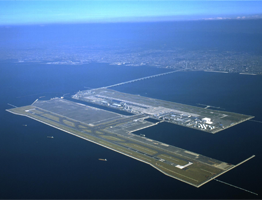
Kansai International Airport, Osaka (Japan)
As is often the case with Japanese creations, this airport surprises from the beginning for the ingenuity and the peculiar use of the resources that were necessary for its construction, since stands on an artificial island, communicated with land through a bridge 3 kilometers long.
His technology Anti-seismic provides the structure with a much-needed degree of security in the land of the rising sun, so often punished by nature and forced to rebuild. During the strong earthquakes of 1995 and 1998, which claimed thousands of victims and left unfortunate damage, the airport remained intact.
Terminal T4 de Barajas, Madrid (Spain)
It is one of the largest buildings in the history of the European continent, as well as one of the most expensive. In addition, it is an airport that shows a commitment to the environment, since it promotes the saving of Energy electricity through the incorporation of solar panels. The architect responsible for this creation is Richard Rogers, a native of Florence (Italy), and his work earned him the Stirling Prize.
Its construction took more than nine years and was supplied with an investment of more than 6 million euros. The terminal covers an area of more than 785 thousand square meters and is capable of serving more than 70 million passengers. Thanks to its many innovations and sophisticated structures, this airport is among the most prestigious of the world.
Pudong Airport, Shanghai (China)
It was inaugurated in 1999 with the purpose of replacing the old international airport of the same town. It is a large airport, capable of accommodating more than 80 million passengers. It was created by the architect Paul Andréu, originally from France.
Among the amenities offered by Pudong Airport is a train commercial that connects its terminal with the city center, a journey that runs at a maximum speed of 431 kilometers per hour.
Leave a Reply