
adipose
Adipose it's a adjective which is used to rate that which has fat or that derives from it. Fat, meanwhile, is the tallow of animal origin or substance composed of fatty acids.
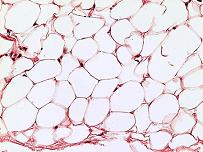
The adipose tissueIn this sense, it is the anatomical tissue made up of cells whose cytoplasm has a high amount of fat. This connective tissue has cells called adipocytes, which owe 95% of their weight to the lipid content.
The protection of organs and other structures is one of the functions of adipose tissue, which also generates and accumulates the fats that the body needs and performs different important tasks for metabolism.
It is possible to distinguish between brown adipose tissue (that produces heat) and the white adipose tissue. In the Humans, adipose tissue is located in the breasts, in the bone marrow, around the organs and under the skin. It should be noted that the tissue has blood vessels.
Brown adipose tissue is also known as brown or multilocular, and it is found in abundance in the stages closest to birth, both before and after. It only fulfills the function of producing hot, very necessary in the first moments of our life.
In the case of brown adipose tissue, the accumulation of lipid takes place in the cytoplasm, and adopts a similar appearance to that of a medium-sized drop, which is surrounded by many mitochondria, which is why it is brown. Unlike what happens in the unilocular tissue (defined later), its nucleus has a not very eccentric location.
The process by which brown adipose tissue produces heat is called thermogenesis, and this occurs from the metabolism of lipids. The protein that is behind this process is called decoupler (its technical name is UCP-1), and is found in the inner membrane of the mitochondria; its name refers to its ability to uncouple the oxidation of fatty acids, after which the energy produced by the mitochondria can be dissipated.
For his part, white adipose tissue, which is also known as white fat, is made up of large cells, whose diameter can easily exceed 100 micrometers (its unit is µm). Various studies indicate that in man it can represent 20% of its weight body, while in women, 25%.
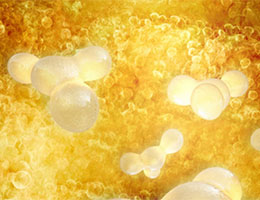
East tissue Adipose has receptors for norepinephrine, growth hormone, glucocorticoid, and insulin. In almost the entire surface of its cytoplasm, it is possible to observe a large fat drop that in histological preparations appears empty, since the fat is extracted during the inclusion process. Outside of this droplet, the nucleus and the remaining portion of the cytoplasm are accommodated close to the cytoplasmic membrane, in a confined space.
The term unilocular, mentioned in a previous paragraph, refers to mature adipocytes, which have only one drop of fat, and therefore the prefix uni-.
When a person suffers obesity, it has a very high amount of adipose tissue. It is common for overweight subjects to accumulate fat in the abdomen area.
Is named adipose panicle to the layer of adipose tissue found, in vertebrate animals, just below the skin.
The fat capsuleOn the other hand, it is located between the renal capsule and the renal fascia. This lipid accumulation provides protection to the kidney: if a person suffers a blow in that area, the adipose capsule cushions it.
Leave a Reply