
fatty acids
A acid is a substance which, in solution, causes an increase in the concentration of hydrogen ions. Acids can combine with bases to develop salts. Fatty, for its part, is what has grease (sebum, lubricant).
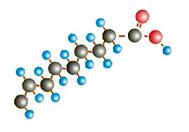
The fatty acids They are biomolecules of lipid constitution that are formed from a linear and extensive hydrocarbon chain, with a carboxyl group at its end. As can be seen, it is necessary to know the meaning of several concepts to understand what fatty acids are.
These acids are biomolecules: that is, molecules that constitute living beings. The lipids, on the other hand, are those molecules that are composed mainly of hydrogen and carbon. Regarding the carboxyl groups, are sets of compounds that have a carboxy or carboxyl functional group (they have a hydroxyl and carbonyl group on the same carbon).
The carbon atoms of fatty acids are linked through covalent bonds, either double or single. At one end of the chain, there is an atom with three free bonds occupying the hydrogen atoms, while the rest of the atoms have two free bonds (occupied by other hydrogen atoms). At the other end, the carboxyl group appears, which combines with some of the hydroxyl groups to generate a reaction.
The lipid bilayer of the plasma membranes of cells is formed with these fatty acids, which belong to the groups of molecules known as glycolipids Y phospholipic. In the case of mammalian animals (including the man), fatty acids are usually found as triglycerides, which are deposited in adipose tissue.
It is important to know, in addition to all the above, that fatty acids, if we take into account their structure at a chemical level, can be divided into three large groups:
-Monounsaturated, which are mostly derived from nuts, salmon, vegetable oils such as wheat ...
-Saturated ones, which are fats. We can say that they can be found in foods that fundamentally have animal origin, as would be the case, for example, butter, cheese, meat ...
-The polyunsaturated, which are divided, in turn, into two groups: omega 3 fatty acids and omega 6 fatty acids.
In recent times, where there has been a notable increase in the number of people who are committed to taking care of their diet, we come across the fact that foods that provide omega 3 fatty acids have taken on a major role. Why? Because they are considered to bring numerous benefits to the body.
Specifically, it is ruled that they favor both the correct functioning of the brain and the nervous system, without forgetting of course that they do the same with the immune system. Not to mention that they notably improve blood pressure or blood clotting, among others.
Omega 6 fatty acids, on the other hand, should be ingested in absolutely moderation and under control. Yes, because an excess of them in the body leads to serious health problems such as arteriosclerosis or even inflammatory difficulties.
Leave a Reply