
acronym
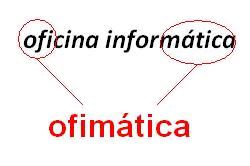
A acronym it's a kind of initials whose pronunciation is done in the same way as a word. Acronyms, on the other hand, are the terms that are composed with the first letters of the concepts that make up an expression.
An example of an acronym is Radar. The origin of this notion is in the acronym that comes from English Radio Detection and Ranging: (RA)it gave (D) etection (TO) nd (R) anging. Being an acronym, radar is used like any word and can even be named in the plural (radars). Some use cases: "The malfunction of a radar forced to close the airport for five hours", "The government announced that it will buy new radars to control the borders".
Another acronym for Spanish is AIDS. In this case, the concept comes from Acquired immunodeficiency syndrome. The acronym can be used in expressions like "There are many organizations that fight to fight AIDS" or "The singer contracted AIDS in his teens".
It should be noted that acronyms are also the terms that are created by linking the parts of two or more words. That is the case of office automation, a word created from office and computing. The acronym is made up of the first three letters of office (offi) and the last six of computing (matic): "We have invested a lot of money in new office automation tools", "My grandfather started an office automation course yesterday".
Emoticon, of English emotion and icon, is also an acronym: “I like to complement my messages in social media with emoticons ", "How cute the emoticon you sent me with your greeting!".
In these last two cases, as well as in many others, it is important to note that the meaning of the acronym also borrows parts of the definitions of the words that compose it, and not just fragments of their structures at the orthographic level. For example, the term office automation refers to the use of computing to complement the tasks of a office, and also to the group of computer programs and components used in this work environment.

Something similar can be seen in the acronym telematics, which is formed by taking the first four letters of the term telecommunication and the last six of computing. In this case, we are facing a concept that refers to the discipline of science and technology that is dedicated to the analysis and implementation of applications and services for use in the fields of telecommunications and computer systems, something possible thanks to the fusion of both fields.
And we must not forget one of the acronyms most used today, which has gone unnoticed in several of the previous paragraphs: computing, which was born from the union between information Y automatic. It is a particularly useful term to understand the phenomenon of combination of meanings that takes place when constructing an acronym.
How many people, outside the field of systems or not, are able to find the right words to define the word computing? The acronym itself is so concise which does not seem to require further explanations, and that shows the effectiveness of its structure, something that should be taken as the fundamental objective of any acronym.
This does not always happen, especially when people start to use acronyms from foreign languages without knowing their exact meanings, and then passes them on to their family and friends, who perhaps further distort their use to give them new meanings. It is worth mentioning that, anyway, this also takes place with the words of his own idiom: In general, younger generations adopt new ways of speaking, made up of expressions, terms and acronyms unknown to their parents and grandparents, and the latter do not always understand them correctly, but they do not hesitate to add them to their vocabulary.
Leave a Reply