
accident
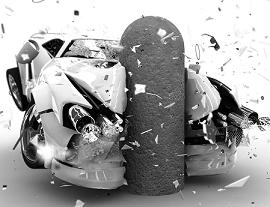
The word accident has its origin in the Latin term accidents. The concept refers to something that happens or arises unexpectedly, since it is not part of the natural or the essence of the thing in question.
The most frequent use of the term is linked to the event that happens without intention and that generates damage to a living being or something. For example: "Two people died in a traffic accident on Route 8", "The young woman remains hospitalized after falling from the balcony by accident", "I accidentally cut myself while preparing food".
Accidents can happen for a variety of reasons and have very different consequences. While a plane crash can kill hundreds of people, a plastic cup that is dropped by accident will not cause major inconvenience.
Accidents can be classified in different ways depending on where they occur. In this way you can talk about home accidents (like an oil burn in the kitchen), accidents of transit (two cars colliding in the street) or the work accidents (a construction worker who trips and falls off a scaffold). This last meaning It gives rise to a lot of controversy in the business sphere, since hiring in the black implies the absence of occupational risk insurance. Thanks to misinformation, the best friend of the exploiters, millions of employees do not know that an accident at work is considered to be one that takes place both while they are in their position and during the trip to and from the office.
It is common in some regions to confuse the term with incident, but there are clear differences between the two. We can think of an incident as a fact that "cuts" reality and alters the course of things. An unexpected event, yes, but that does not represent a misfortune or the destruction of something, but possibly leads to a change in decisions.

A Geographic accident, on the other hand, it is an elevation, a depression or another type of irregularity that can be seen in a terrain. Some examples are cliffs, gulfs, hills, valleys, and blue holes.
Accidents also appear on the grammar and in the music. In the first case, they indicate word modifications according to time, gender or number, allowing coherence to exist in the sentences. The Spanish words that are affected by these changes are adjectives, nouns, verbs, pronouns and articles. These alterations can affect its structure, its mode or even its meaning.
In music, on the other hand, accidents enrich a melody since they allow combining different tonalities through momentary alterations. To give a didactic example, if we are composing a piece in C major for piano, in principle we will only be able to play the white keys, which correspond to the sounds allowed within the scale mentioned. However, one of the C-related keys is G major, which contains one of the black keys (the F sharp). So, if we wanted part of the work to go through SOL major for a moment, every time we write an F in that section, we should clarify that it is sustained. This, in the sight of a musician, is an accident.
In our idiom, the noun in question also has a very derogatory and dangerous use for a person's psychology: children who are conceived by accident. Given the high rate of unexpected pregnancies, especially in teenagers, millions of people carry this terrible label of unwanted child on their forehead.
But all the nuances that this word gives to sentences are not necessarily negative or tragic. It is said, for example, that someone heard something by accident meaning that he did it involuntarily. While the information you accessed may be a terrible thing for that person, it could also be about plans for a surprise party or a marriage proposal. It will be up to each one to judge these last two pieces of news and decide whether or not they have a happy or disastrous character.
Leave a Reply