
academy

With origin in a Greek word that derived in the Latin term academy, a academy is a scientific, literary or artistic society established with public authority.
The word arises in Greece from the mythological hero Akademos, which had a house with a garden, a park and a gym in the northeast of Athens, lands that were acquired by the well-known philosopherPlato in the year 384 BC for the purpose of teaching natural sciences, dialectics and mathematics.
In the year 529, the Byzantine emperor Justinian I decreed the closure of this institution considering it pagan. Until that date, the philosophical school founded by Plato had been evolving, so it can be distinguished between old academy, second academy Y new academy.
Today, the academy is a educational establishment of a professional, artistic, technical or practical nature. They are generally related to foreign language and computer training, and they often run aggressive advertising campaigns. Many people consider that to learn something, the tutelage of a teacher is necessary, and that if a degree is received at the end of the course, it is more valid. It is thanks to this conception of the study that many academies subsist that offer mediocre services at excessive prices.
Taking programming as an example, it is a discipline that requires a lot of study and dedication; not only does it involve learning several languages and their subsequent practice so as not to forget the syntax of each one, but it also implies constant research to keep abreast of technological advances and share knowledge with other programmers. However, many people do not know the passion and dedication necessary to dedicate themselves to this field and believe that an intensive course is enough.
The notion is also used to name the meeting attended by fans of the Arts and the Sciences. In the field of painting and sculpture, the academy is the study of a whole and naked figure, which is taken from nature and is not part of a composition.
On the other hand, Academy is the name by which it is known Racing Club, an Argentine club based in the city of Avellaneda (Buenos Aires province). Was founded on March 25, 1903 and acquired the nickname after winning nine titles (seven in a row) in the amateur era and becoming the first Argentine team of the professional era to win a local three-time championship.
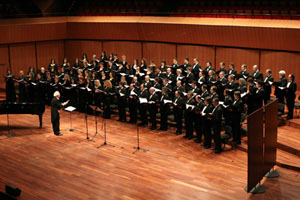
Inside the world of music, the National Academy of Santa Cecilia is an institution based in Rome that has seen many of the world's most important figures, such as Cecilia Bartoli and Sumi Jo, pass through the classrooms of its conservatory, and whose orchestra participates in recognized recordings by conductors of the stature of Myung-whun Chung. Its foundation dates from the year 1585 and is named after the patron saint of music, whose day of birth (November 22) was adopted internationally as Music Day.
Another academy of great international recognition is the Royal Spanish Academy, whose acronym is RAE, and it is only one of the twenty-two institutions cultural that make up the Association of Academies of the Spanish Language. Its main objective consists of an in-depth study of the linguistic differences between Spanish-speaking countries to try to unify the use of the Spanish language, constantly adapting it to social trends, as happened with the word "yogourt" (originally a Turkish term and later adopted by France), which was accepted as "yogurt" given the difficulty of most Spanish-speakers when pronouncing it and remembering its spelling.
Leave a Reply