
aberration

The concept of aberration has multiple uses and meanings, as the dictionary of the Royal Spanish Academy (RAE). The word, as officially accepted, can refer to a very serious error associated with the ability to understand; when activating depraved or perverse, which is far from what is considered as something lawful; to the deviation from the normal type that, in certain situations, experiences a morphological or physiological character; or the apparent deviation of the stars, among others.
The aberration in optical systems (such as mirrors, lenses or prisms) represents a degradation of the images that occurs when the light that comes from a certain point of an object does not converge towards a single point once it has been transmitted through a system.
Other aberrations linked to light that can be identified are the spherical aberration (a defect characterized in that the light rays incident parallel to the optical axis are diverted to a different focus) and the chromatic aberration (the alteration of the distance of the image with the index of refraction).
Aberration of light
The phenomenon that describes the different position of a star when observed with respect to the real one is called aberration of light. James Bradley, a professor of astronomy at the University of Oxford, discovered this peculiarity in 1725, while seeking to establish the distance between a star and our planet. To do this, he made two observations, each at different times of the year, with the aim of achieving a more precise triangulation of the star, thanks to the orbital motion of the Earth.
Bradley noted with amazement that the fixed stars presented a translation systematic that was linked to the direction of the earth's movement in its orbit and that did not depend on the location of our planet in space, as was believed up to now. The highest value of variation between the observed position of a star and the true one is of 20.47 seconds of arc; this is known as aberration constant. If we calculate its trigonometric tangent, we obtain a result very close to the ratio of the orbital speed of the Earth and that of light.
Chromosomal aberration
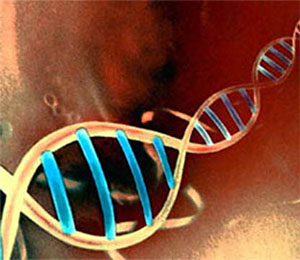
A chromosomal aberration constitutes an error that arises during the meiosis of the gametes or when the first divisions of the egg take place, a phenomenon that triggers an anomaly that influences the number or composition of the chromosomes. This phenomenon can cause multiple disorders, such as the development of the so-called Down's Syndrome.
The disturbance it can occur in the structure of the chromosome with respect to the linear ordering of genes, and the reasons are various, as well as its characteristics and consequences. We cite a few below:
* Deletions: when a fragment of the chromosome is lost, either at one end or along one of its arms, generating an imbalance, noticeable in Prader-Willi syndrome;
* Duplications: causes a living being to contain extra genetic material, since a chromosomal region is duplicated, as occurs in fragile X syndrome;
* Investments: it consists of the change of orientation of a segment of the chromosome, and does not usually cause disorders considerable. Can be pericentric, if the centromere is included in the inverted part, or paracentric, when it is not;
* Ring chromosome: This alteration is rare and consists of the fusion of both arms of a chromosome. Its development on the X chromosome is one of the causes of Turner syndrome;
* Translocations: describes the transfer of a portion of one chromosome to another, which does not imply loss or gain of information genetics.
Leave a Reply