
Fixed costs
Índice()
What are fixed costs?
Costs or fixed costs are those costs that an organization must always pay, regardless of its level of production. They are known as fixed because they do not vary with changes in the production of goods and services.
In other words, fixed costs are those that no matter how much is produced, they must always be paid. For example, the rent of an office or a premises, salaries, telephone and internet services, payment of insurance, etc.
Unlike variable costs, fixed costs do not depend on the level of units produced, so they are always constant.
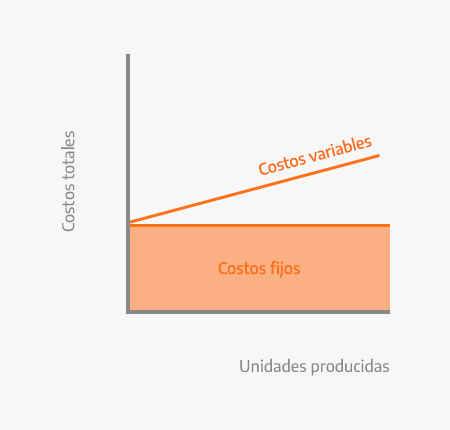
Fixed costs graph.
Types of fixed costs
Fixed costs can be discretionary or committed.
- Discretionary: those that can be reduced without changing the production of the organization, such as advertising or rentals. Organizations tend to be more flexible about these.
- Committed: those that are not prone to modifications, since otherwise the production would be affected. For example, professional salaries, insurance, taxes, etc.
Examples of fixed costs
To better understand this concept, let's look at some examples of fixed costs:
- The payment of rental of a premises, warehouse or office, which must be done in a timely manner, is a fixed cost. Prior to this, a contract is drawn up in which the price is established, which must be canceled in the time indicated in the contract.
- Payments for insurance in the event of claims, whether they occur or not.
- Payments for services telephony, internet, water, electricity, etc.
- Payments for personnel services for labor.
- Municipal permits and licenses are also fixed costs.
Go up
Leave a Reply