
How to save water (3 effective tips)
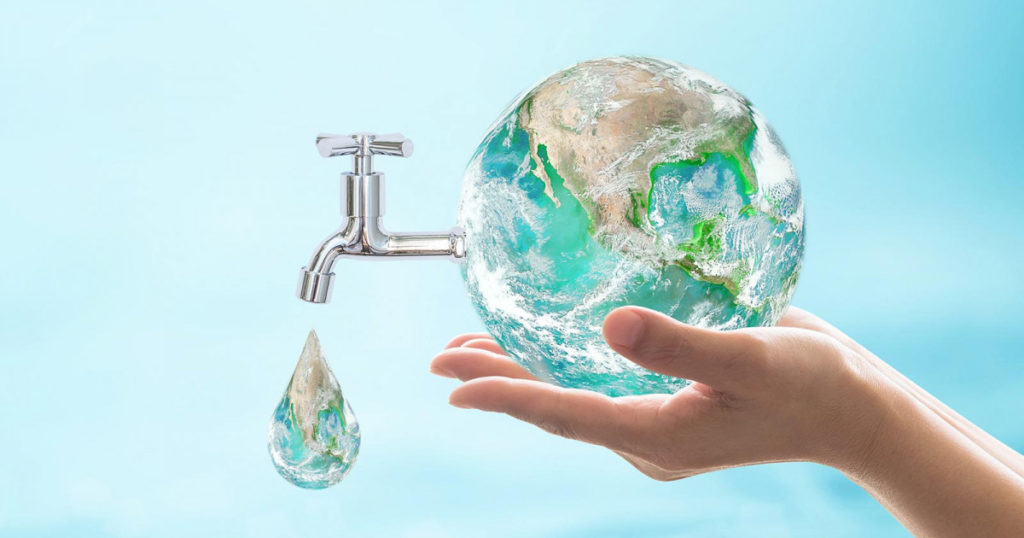
In today's world there are two types of people: those who can access clean water and those who cannot. The truth is that, for those of us who are fortunate enough to be in the first group, having clean water seems obvious, something that is taken for granted. However, millions of people are in the second group and face a daily struggle full of sacrifice and effort to achieve an acceptable daily dose of drinking water. That is to say, fresh water is not an inexhaustible good. On the contrary, it is a limited resource and, at the same time, essential to be able to live.
Water: a good not infinite
In the present moment, there are many experts who warn of the danger in which the planet is found. Damage to the ecosystem is devastating all bodies of water on Earth: oceans, lakes, rivers and streams. Consequently, all life that depends on these waters also ends up being destroyed. Therefore, the alert for the scarcity of water and the consequences that this can have for life is increasing.
Actually, the situation in front of us is by no means simple. 93% of the water on the planet is salty, so it is not suitable for consumption. Of the remaining 3% that constitutes fresh water, only 0.5% is drinkable. In addition, there are amounts of water that are present in the atmosphere, the surface of the earth ... so they are not usable for human use.
Due to the scarce amount of water available for the entire population of the planet, it is necessary to use this precious commodity in a conscious and responsible way. Saving water is essential because it is vital for everything we do in our day to day: washing, drinking, cooking, cleaning, etc. In other words, having water is a requirement for proper health and living conditions.
In addition to being a resource for personal use, it is also crucial for industries and farms that allow food to be produced. Without water, crops do not grow and there are no raw materials to consume. On the other hand, water is, as for humans, basic for the survival of animals and plants.
If we begin to act responsibly by controlling our water consumption, we will be able to prevent severe droughts from hitting the planet in the future, we will reduce pollution and save the energy that must be used to treat the water already used. Due to the enormous importance that water has for our lives, it is essential that in our daily lives let's try to take effective measures to limit its consumption and not waste it. In this article we are going to collect a series of effective tips to save water.
How can I reduce my water use?
If you have become aware of the importance of saving water but do not know how to start, in this article we are going to give you some useful tips.
1. Limit spending in the kitchen
In the kitchen there are many aspects that you can take care of to avoid wasting water. First of all, it is important that When washing the dishes, try to turn off the tap while soaping the dishes. In this way, you should only open it when you are going to rinse what you are cleaning. Although it seems like a simple gesture, you can save large amounts of water if you apply this simple measure on a day-to-day basis.
To wash the dirtiest utensils such as pots or pans, it is useful to soak them for a few minutes before scrubbing them, as this will soften the dirt and you will have to spend less time with the tap running when you clean them. If instead of washing your dishes manually you choose to use the dishwasher, we recommend that you only start it when it is completely full.
In this way, you will not waste the energy and water that the appliance consumes disproportionately. What's more, remember that rinsing the dishes before putting them in the dishwasher means doubling the use of water. The most current dishwashers usually have an ecological program that allows you to wash your dishes with minimal water consumption, so if you have that possibility, do not hesitate to try it.
If you are thinking of changing your dishwasher, try to get one that has this mode. Although their price is higher, they consume a minimum amount of water and energy, so in the medium and long term it will mean a reduction not only in the cost of water but also in your pocket.
2. Save water in the bathroom
Like it happens when you do the dishes, it is important that while brushing your teeth or shaving you keep the tap turned off, since this way you will avoid wasting a good amount of water. According to this same logic, when you shower, try not to turn on the tap while lathering your hair or body. If there are small children at home, an hourglass can be used to help them learn to control the time they have the tap running.
It is very important that you use the toilet properly. This is not a wastebasket with water, so avoid throwing away paper or other materials as if it were a container, since this will waste the water in the cistern unnecessarily. If you have a double button toilet, remember to use it correctly. Don't use full power if you don't have to.
In addition, it is important that make sure your toilet is working the right way and is not leaking, since these can lose hundreds of liters of water. Although we know that sometimes you may want to take a relaxing bath, the truth is that this option is not the most ecological. Try to shower and not take too long the shower, as this will consume as little water as possible when cleaning.
In the shower every minute is synonymous with about 10/15 liters of water. If this data impacts you as much as it does us, with these simple tips you can limit waste. Another interesting option to reduce consumption in the shower is to use a special shower head that allows you to save up to 50% without even noticing the difference.
In addition, there are devices called reducers, which allow air to be introduced into the water jet to reduce the number of liters per minute that are expelled. This simple measure can be applied both in the bathroom and in the kitchen and allows us to reduce consumption by up to 50%.
3. Take care of wasting water outside
In addition to being able to save water inside your house, it is also possible to take measures outside. If you have grass or plants, it is recommended that you water them at times when water evaporation is less. Thus, optimal times are first thing in the morning and at night. If you use utensils such as taps or hoses, make sure that they are in good condition, because sometimes small breakdowns can cause leaks that trigger water consumption without us being aware.
If you have a large garden, you may be tempted to use the hose to remove dirt and debris from branches and leaves. However, this involves a huge consumption of water, so it is advisable to try to remove the dirt with a broom and reserve the use of water for the final touch.
When it comes to watering your plants, it is essential that you use the appropriate means depending on the type. Small areas should be watered using a watering can, while for the larger ones it is better to use automatic irrigation systems. As with household appliances, these can sometimes be programmed to operate in an ecological way, so it is convenient that you inform yourself to use your system efficiently.
Conclusions.
In this article we have reviewed three large groups of tips that can be very useful to save water in your day to day. Water is one of the most precious assets we have, since without it life would not be possible. This is basic in everyday tasks such as drinking, washing, cleaning or cooking, although it is also vital for the production of food and the survival of plants and animals.
Despite how necessary it is for life, safe drinking water represents a ridiculous percentage compared to the quantities that, since they are salty, cannot be used. Water as a resource has remained stable and has even decreased, while the population has tended to increase. For this reason, the only way to deal with this shortage situation is to take steps to save water.
In this sense, individual responsibility is a central point, since saving water requires a daily commitment, from so that more than a punctual action it is a habit established in our lives. Saving water can be achieved with very simple measures, such as closing the tap while we are not using the water, using ecological appliances or devices that facilitate cost control, using the toilet correctly or watering our plants at the appropriate time.
These tips require changes that require very little effort, yet allow us to achieve great results. In addition to helping to take care of our fresh water reserves and maintaining our ecosystem, you will also notice the difference in your pocket, since consumption can be cut by up to 50%.
Leave a Reply