
The 10 types of coordination (and their characteristics)
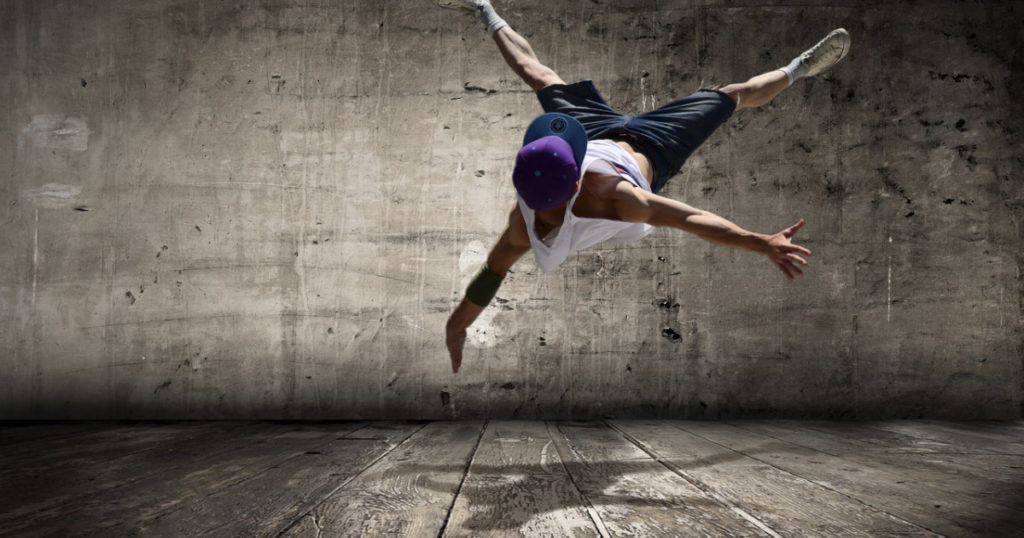
The human locomotor system is one that, born from the union between the muscular system and the osteoarticular system, allows not only to protect the internal organs, but also movement and locomotion, something essential both to interact with the environment that surrounds us and to move around By himself. Locomotion is an essential function.
And in this context, we have an active system made up of the 650 muscles of the body that, when contracting, cause body movements, thus dragging bone mass and being helped by ligaments, tendons, cartilage and joints. Hence, muscles are considered the functional organs of the locomotor system.
This capacity for contraction and relaxation is mediated by the nervous system, since neurons communicate with muscle cells to, through an association with actin and myosin (filaments inside these muscle cells), allow the muscles to comply with its biomechanical functions. Thus, muscle activity must be perfectly synchronized at the nervous level.
And it is precisely in this context that the concept that we will dissect in today's article comes into play: muscular or motor coordination. There are many different forms of coordination that determine our physical abilities. And in today's article and from the hand of the most prestigious publications, we will understand what coordination is and, above all, what classes exist. Let's go there.
What is muscle or motor coordination?
Coordination is an ability of the skeletal muscles of the body to synchronize in trajectory and movement to perform a technical gesture. It is, therefore, a complement to the purely physical capacities that, at the level of the nervous system, allows optimal synchronization of the various components of the locomotor system to perform complex physical functions.
In this sense, coordination arises from the harmony between the brain (which sends orders), spinal cord (which sends them to the peripheral nerves), peripheral nerves (which makes them reach the muscles), muscles and skeleton. This balance is what allows us to regulate muscle tone and perform fine and precise movements that are perfectly synchronized.
Thus, we can also speak of neuromuscular coordination, an ability that can be impaired in about 8% of school-age children. These children may have motor education problems and, due to lack of motor coordination, walk in an unstable way, have a tendency to stumble, collide with other children or difficulties to hold objects.
And is that to develop optimal muscle coordination skills, we always need learning and, above all, automation. All this develops during childhood and will give us the tools that, at a nervous level, will allow us to carry out movements in a directed, organized, synchronized and precise way.
As we have mentioned, coordination acts on skeletal muscles, which, also known as striated, are those whose control of contraction and relaxation is voluntary. They represent 90% of the body's muscles and are those that are inserted into the bones to transmit force to them and allow the body to move.
What kinds of coordination are there?
Now we have understood what muscle coordination is at a general level, but as we well know, the coordination needed to dance and that needed to hit a ball during a soccer game has nothing to do with it. Each of us has particular motor coordination skills. And then we are going to see what the main types of coordination are so that you can discover what your strengths are. And the weak, of course. Let us begin.
1. Dynamic coordination
Dynamic or general coordination is that form of motor synchronization that allows us to move different parts of the locomotor system without interfering with each other. That is, it is that general coordination whose development allows us to move the body effectively without the movement of some parts affecting others.
All parts of the body are involved and require a global synchronization in which each locomotive region fulfills its function in a particular way but within a set and without interfering with the motor activity of other regions. It is the type of coordination that gives us stability during dynamic changes and is what we need to walk or run, for example.
2. Spatial coordination
Spatial coordination is that form of motor synchronization that is based on giving us the physical aptitudes to organize our muscular movements when they have to adapt to a trajectory or a foreign space. It allows us to adjust our muscular activity to the movement of a moving object around us in order to carry out the technical gesture that we need. A clear example of this is that of batters in baseball, who have to coordinate their movement with that of the ball in order to hit it.
3. Intramuscular coordination
By intramuscular coordination we understand the ability of our body's muscles to contract when they are commanded by the central nervous system and through the peripheral nerves. The muscle cells have, inside, some actin and myosin filaments that are activated when they receive the muscles receive electrical impulses and that allow the myocytes (muscle cells) to contract, an action that, as we have seen, makes possible the biomechanical action of the muscles.
4. Intermuscular coordination
By intermuscular coordination we understand the overall ability to activate different muscles during physical activity. It is not limited to the contraction of a specific muscle (as for intramuscular), but several different muscles are activated in a synchronized way to perform locomotor actions. When we shoot a ball, different muscle groups come into play that must coordinate with each other. Hence the prefix "inter".
5. Segmental coordination
Segmental or segmented coordination is one that involves increased dexterity in specific regions of the body. Unlike the dynamics or general, which is based on an increase in the global synchronization of the locomotor system of the body, here specific coordination reactions of the anatomical area are enhanced.
In this form of coordination, the sense of sight plays an essential role. In fact, this type of motor synchronization is based on the relationship between vision and different parts of the human locomotor system. Being region specific, we can distinguish three main forms of segmented coordination: eye-hand, eye-pedic, and eye-head.
5.1. Eye-hand coordination
Eye-hand coordination is a type of segmental coordination whose development allows an enhancement of motor skills involving the use of hands. Hence its name, as it is the synchronization between the visual and the manual. Also known as eye-hand or visual-motor coordination, it is one that allows us to handle our hands depending on what we are perceiving with the sense of sight. From typing a computer to throwing a dart. Many daily actions require eye-hand synchronization.
5.2. Oculo-pedic coordination
Oculo-pedic coordination is a type of segmental coordination whose development allows an enhancement of motor skills involving the use of the feet. Hence its name, as it is based on the synchronization between the visual and the pedic, associated with the feet. In a similar way to the previous one, this type of coordination allows us to handle our feet in an optimal way depending on what we perceive through the sense of sight. Playing soccer is, surely, the best example of this.
5.3. Eye-head coordination
Eye-head coordination is a type of segmental coordination whose development allows an enhancement of motor skills involving the use of the head. And by "head" we mean the anatomical region, not the concept of "mind". In a similar way to the previous two, this type of coordination allows us to move our head based on what we perceive with the sense of sight, adapting to the needs that the environment awakens in us. Finishing off a ball with the forehead is a clear example.
6. Static coordination
Static coordination is a particular type of coordination, since is the only one that pursues the "non-movement". That is to say, it is about the motor ability that allows us to be physically stable when we are standing on a surface, having control and stability over our posture. This form of coordination makes us automatically perform slight compensatory movements to achieve a minimum of oscillation.
7. Fine coordination
Fine coordination is that form of motor synchronization that leads us to be able to perform very precise movements. It is based on the development of locomotive skills to coordinate slight muscle movements that allow us to develop precise and, as its name suggests, fine manual tasks. Knitting is a clear example of this type of coordination.
8. Coarse coordination
Finally and as a segment opposite to the previous one, gross coordination is that form of motor synchronization that does not lead us to be able to perform very precise muscle movements, but to develop locomotor tasks that involve large biomechanical regions. This thick coordination observed in movements that do not require much precision, such as jumping.
Leave a Reply