
Brain plasticity (neuroplasticity): what is it and how does it work?
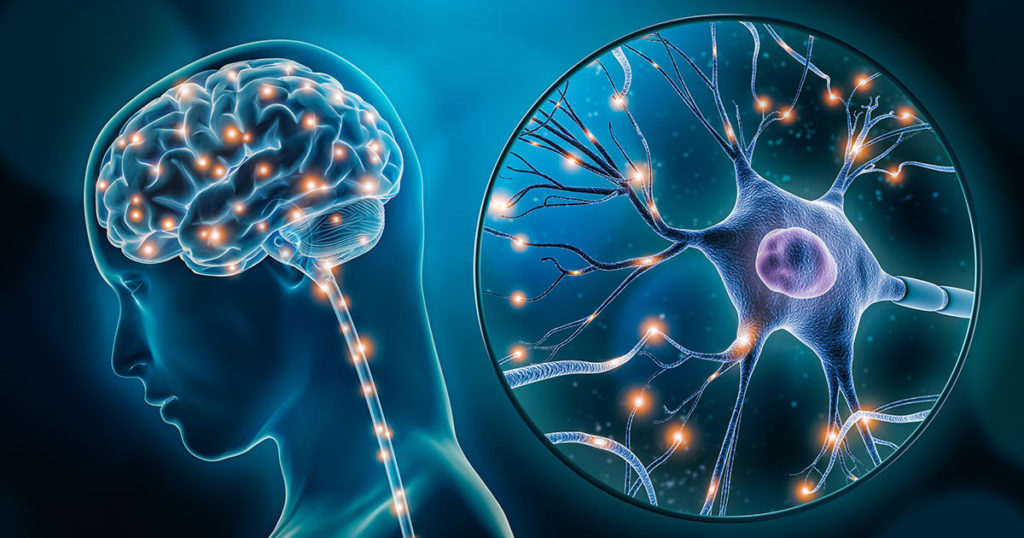
It may be striking, but there is no more complex object discovered in the Universe than that organ that we have inside our skull: the brain. Everything we feel, think and imagine is within a structure of between 1,300 and 1,500 grams. The organ that centralizes the activity of the nervous system and that acts as our command center.
And despite the fact that he remains one of the great unknown to science, throughout history we have solved many enigmas about him and, above all, debunked many myths. And one of them is that the brain is a static structure that does not evolve throughout life. The brain changes, evolves and adapts.
And it is precisely in this context that the term brain plasticity emerged, the property of the nervous system through which the brain modifies its structure and functioning throughout life as a reaction to the influence of the environment. Each brain is unique. Each brain has special neural circuits and a particular structure that are not explained by genes, but by how what happens around us influences us.
Thus, in today's article and from the hand of the most prestigious scientific publications, We will explore the neurological bases of this brain plasticity, also known as neuroplasticity.. Let's see what this concept is, how it happens and what evolutionary advantages it represents. Let's go there.
What is brain plasticity?
Brain plasticity, neuronal plasticity or neuroplasticity is the property of the nervous system through which the brain is capable of changing its structure and functioning throughout life through interaction with the environment.. It is the neural characteristic that makes each brain unique, developing beyond what genes establish.
It is a neural event that occurs at all hours and throughout our lives, since there is not a single moment in which we do not receive stimuli that, at the nervous level, force the brain to adapt morphologically and physiologically to them. This constant influence of the environment is what makes the brain change and, therefore, this brain plasticity to happen.
And it is that the concept of "plasticity" refers to the amazing ability of the brain to adapt to any situation, as if it were a plastic adapting to the shape of a mold. At a more technical level, the term, despite being difficult to define, refers to the changes that occur in the central nervous system in terms of genetic expression, neuronal structure, behavior and molecular nature.
Thus, brain plasticity allows neurons to regenerate anatomically and functionally and to establish new connections, that is, synaptic processes change depending on the needs that the environment awakens in us. Through these neural modifications, the brain recovers from potential injury and restructures itself to achieve maximum adaptive efficiency.
"Plasticity" means being able to change. It means being able to modify habits, modify previous knowledge and learn new things. It means being able to discard memories and memories that we no longer need. It means being able to change our brain to achieve maximum adaptation to the environment.
How does neuroplasticity happen?
To understand how this brain plasticity is possible, first of all we have to stop thinking of the brain as a compact mass and start to think of it as what it really is: the sum of more than 100,000 million neurons that function as individual units but establishing connections between them from which all the events that occur in our brain emanate.
And if we talk about connections between neurons, we have to talk about the synapse. The physiological process that enables communication between neurons, which form incredibly complex networks through which information is transferred in the form of "electricity." The language of the nervous system.
Neuronal synapse is the biochemical process by which a neuron carrying a nerve signal is able to "tell" the neuron of the following network how it has to charge electrically so that the message is preserved along this "highway". Neural axons conduct the electrical impulse so that, in the synaptic buttons, neurotransmitters are synthesized and released.
These neurotransmitters are released into the interneuronal environment to be taken up by the dendrites of the next neuron in the network, which will absorb these molecules. Through these neurotransmitters, said neuron has received very specific information on how to activate itself electrically, preserving the message and the nervous information. This is what the synapse is based on.
And in this context, when a group of neurons tend to send information to each other since their activation pattern repeats frequently, they will establish more intense “synaptic junctions”, being more predisposed to send information to each other and, therefore, establishing some more stable and stronger networks. This increased likelihood of certain neurons firing together is what defines the microstructure of the brain.. And this is unique to each person. Well, these networks, more than genetics, depend on what we capture from the environment and how we have to respond.
But this microstructure is not static. It is dynamic. Neural connections are modified throughout life, encoding what is important in a particular context and getting rid of what is less relevant. Less used networks will be eliminated in favor of new networks that we do need. And this, in a continuous state of change. This is where brain plasticity lies.
In summary, and despite the fact that the concept itself is complicated, we must understand brain plasticity as the positive consequence of the property that the nervous system has both of establishing stronger and stronger neural networks the more we use specific synaptic pathways and of purifying ourselves. of the least important.
This continuous change in the neural networks of the brain is what allows us to adapt to what is happening around us, take full advantage of the efficiency of the neural synapse and learn. The brain, as an organ, the more it is stimulated, the more it will develop its structure (or neural microstructure, as we have seen) and function. Our brain is plastic. And this has myriad evolutionary advantages.
Neuroplasticity and evolution: why does our brain change?
As we have seen, brain plasticity is the ability of the nervous system to, through a modification of synaptic pathways, modify its biological, chemical and physical properties according to the needs and influence of the environment. So it goes without saying that this is one of the neurological properties with the greatest evolutionary meaning.
And it is that although it is true that it is in childhood that this brain plasticity is greatestSince it is the stage in which we collect most of the information that will help us determine the structure of the brain as it matures, neuroplasticity is a phenomenon that continues throughout life.
It will never be as noticeable as in the first years of life, but if we make an effort to make the brain work (for example, with exercises and activities that stimulate memory), we expose ourselves to new stimuli and we do not stop learning new things, our brain It will continue to purify unnecessary synaptic pathways and establish new ones, with all the advantages that this represents.
Learn from experience, develop complex ways of thinking, learn a language, adapt to changing situations, modify our way of thinking throughout life, generate abstract ideas, learn from our mistakes ... There are innumerable advantages that, at the individual and population (without it, the development of the human species would not have been possible), has had this amazing capacity of our brain.
Thus, Although it is also behind the development of phobias and traumas that we can suffer, neuroplasticity is an essential property of our nervous system. Natural selection has always rewarded characteristics that are beneficial to the species. And this was not going to be an exception. Without this plasticity, we would be robots. Entities that "leave the factory" all the same. But if each of us is unique, it is because of this property cerebral.
The most widely accepted definition of "brain plasticity" was established by the World Health Organization (WHO) in 1982, establishing that it is the ability of the cells of the nervous system to reorganize themselves anatomically and functionally after having been subject to environmental influence or development.
But this and other cold definitions do not do justice to the personal and social importance that this brain capacity has in our lives. It is, in short, the neurological process that makes us who we are, that we learn, that we adapt, that we change our way of thinking and seeing the world and, ultimately, that we are human.
Leave a Reply