
The 6 plastic surgery operations covered by Social Security (and what they consist of)
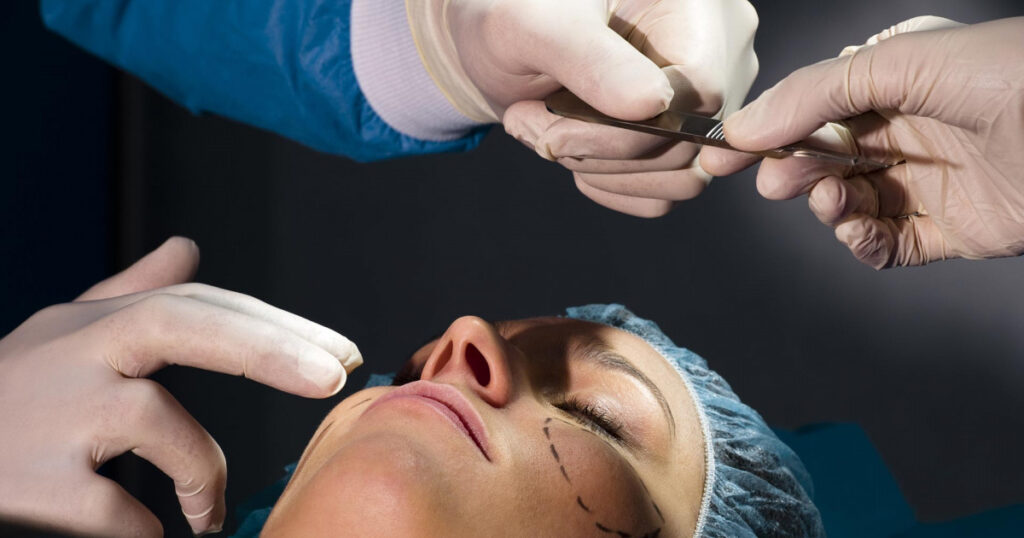
Plastic surgery has changed the lives of many people with aesthetic problems, but also with health problems beyond appearance. In recent years, this branch of medicine has undergone a spectacular evolution. Thus, far from the cumbersome interventions of the past, today there is a whole range of advanced techniques and methods that are less invasive than in the past. These improvements have made it possible to carry out a greater number of procedures and, therefore, reach many more patients than before.
Spain is one of the countries where more surgeries of this type are carried out annually. In particular, the most popular interventions are those of an aesthetic nature, especially breast augmentation and liposuction. However, we will see how not all surgeries of this type are performed for aesthetic reasons, but also have important applications to improve the health of many patients.
What is plastic surgery?
Plastic surgery is defined as a surgical specialty that deals with correcting any congenital, acquired, tumoral or involutional process that requires repair or replacement, or that affects the shape and/or function of the body.. This medical field has, in turn, two different branches of application:
-
reconstructive plastic surgery: This variant deals with restoring or improving the function and appearance of those injuries caused by accidents, burns, diseases, congenital anomalies, etc.
-
aesthetic plastic surgery: This branch is dedicated to intervening on healthy patients in order to correct aesthetic alterations. The purpose of this surgery is to obtain greater facial and/or body harmony, as well as to alleviate the effects of aging.
The problems dealt with by plastic surgery, whether for health or aesthetic reasons, generate emotional problems in patients and reduce quality of life at all levels. Therefore, the relevance of this field of medicine is indisputable.
The great drawback of interventions in plastic surgery is the high cost of their interventions. For the majority of the population, the amount to which the price of an operation of these characteristics rises is unaffordable. It is for this reason that Social Security covers some of them. In this article we are going to comment on the plastic surgery operations that can be performed free of charge through the public health system.


The truth is that the majority of the population associates plastic surgery with exclusively aesthetic operations. However, as we have seen, plastic surgery can also repair severe damage caused by accidents and diseases of all kinds. It should be noted that most reconstructive plastic surgery operations are covered by Social Security.
But nevertheless, the most common is that many times it is difficult to specify if an intervention is for aesthetics or for health. In other words, appearance and health status often go hand in hand. These nuances are decisive, as they will determine whether or not an operation can be performed in the public health system at no cost.
For example, a woman who wants to reduce her breasts can do so for aesthetic reasons, but also for health reasons (back pain, discomfort in daily activities...). Social Security usually covers the intervention if it is for health, but not if it is for purely aesthetic reasons.
For all this, Social Security always carries out a preliminary study of each case, in order to assess whether or not it will be assumed. The candidates most likely to be accepted are those with great psychological involvement due to their complex, with physical problems that pose a risk to present or future health, or those with birth deformities or those caused by accidents.
In the event that a person is rejected to be intervened in the public system, their only alternative is to carry out the same operation in the private health system. Next, we are going to know the aesthetic operations that could be carried out in Social Security (after evaluation by the medical team).
1. Abdominal surgery
This type of surgery can be performed to relieve health problems, such as back pain, ulcers, hernias, etc. It is a procedure that improves the appearance of the muscles and skin of the abdominal area, in those cases in which they are flaccid and stretched. Depending on each person, the region covered in the intervention will be more or less extensive. It can be useful for those who have lost large amounts of weight and their skin and muscles have been affected.


2. Breast surgery
Breast surgery allows correcting congenital asymmetries, reducing very voluminous breasts that cause health problems, rebuild the breast after breast cancer or eliminate gynecomastia (increased amount of mammary gland tissue in boys and men).
3. Otoplasty
This surgery is performed in the area of the ears, and is treated in public health when there is a deformity or a great psychological affectation for the patient. Otoplasty is a procedure that allows you to change the shape, position or size of the ears.
People who feel uncomfortable because their ears are too far from their head or because they have birth deformities can resort to this intervention. Unlike other aesthetic operations, otoplasty can be done at any age once the ears have reached their final size (usually this occurs at 5 years).
4. Rhinoplasty
Rhinoplasty is an operation that is carried out in the nose area. This can be done in public health when there are respiratory problems or malformations.
This intervention modifies the shape of the nose and is one of the most performed surgical procedures in the field of plastic surgery. Rhinoplasty can reduce or increase the size of the nose, change the shape of the tip or back, narrow the nostrils, and even change the angle between the nose and the upper lip. In Social Security, it is common for it to be carried out to treat respiratory problems, injuries or congenital problems.


5. Blepharoplasty
Blepharoplasty is a cosmetic surgery that aims to correct excess skin on the eyelids. Mainly, it can help treat the bags that are generated in the lower area of the eyes and also corrects the sagging of the tissues that surround the eye. These problems usually have a genetic root, but over time they can produce alterations in this area that can be annoying (mainly vision problems) and cause psychological discomfort in the person.
6. Face surgery
Facial surgery is usually applied in public health to correct facial asymmetries in the face caused by facial paralysis, to treat injuries that affect the lips, cheeks or facial muscles. It can also be used to treat traumatic deformities of the head and neck.
Advantages of plastic surgery
The benefits plastic surgery can bring to people's lives are often underestimated. The changes that this type of intervention can achieve in people can have a great impact on their well-being and quality of life. The conditions treated by plastic surgery often produce important consequences on self-esteem, self-confidence and relationships with others.
For this reason, surgery can be a boost that helps many people feel better about themselves. Of course, we cannot forget that a medical intervention such as the ones we have mentioned requires the advice and assessment of the surgeon, who will guide the patient, clear up any doubts and accompany him throughout the process.
As we have seen, aesthetic conditions are not only treated for sheer superficiality. Frequently, these are related to the state of health, so it is necessary to intervene to treat what is not right. For example, nasal trauma can cause breathing problems, a chest that is too large can cause back pain or droopy eyelids can make it difficult to see.


Especially important is the role of plastic surgery in those people who have suffered traumatic events, such as accidents or serious illnesses. Reconstructing the physical consequences of these experiences is of great help so that the person returns to feel like before, safe and confident. In any case, it is always advisable to calmly reflect on the desire to carry out this intervention and clear up all possible doubts with the professional who is going to carry out the operation.
The fact that Social Security has offered coverage for this type of intervention is an example of the importance that the appearance and structure of our face and body can have in order to feel safe.. There is no doubt that health is a holistic concept and there must be harmony between our body and mind, so repairing the damage can be therapeutic for many patients.
Of course, we are talking about situations in which there are very intense complexes or when the affectations are very notable. Beyond that, it is clear that cosmetic surgery is not going to magically make us begin to accept and love ourselves as we are. For this reason, it is also relevant to delimit the field of work of this discipline and to know what type of cases it manages and which it does not.
Leave a Reply