
The 3 differences between passive and active euthanasia (explained)
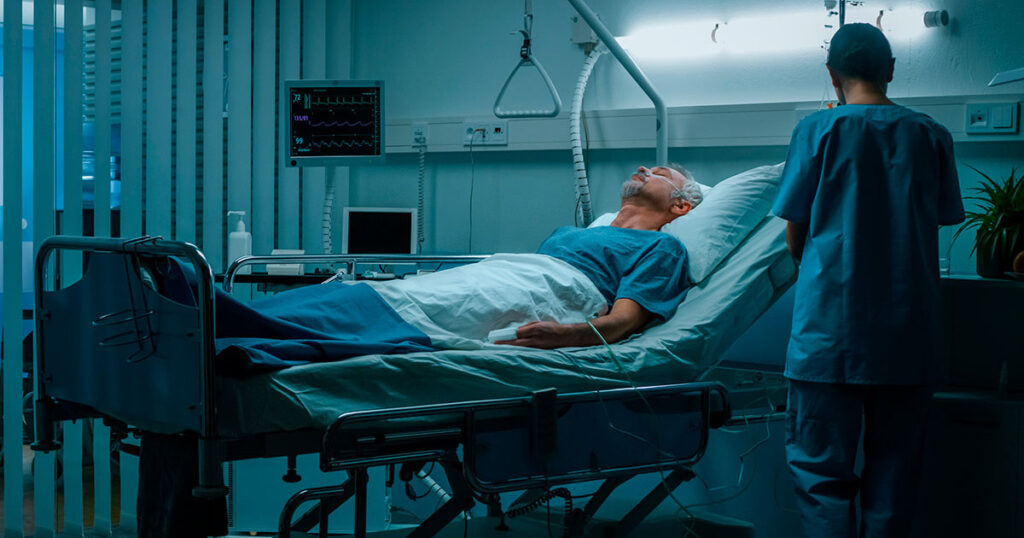
Until a few decades ago, death was conceived as something normal and everyday. However, in recent years this has ceased to be experienced as a natural event to be conceived as something strange, occasional and alien to the flow of life. In ancient times, death was integrated into social and family life. Thus, when someone died, his body was watched over in his own home by loved ones.
In the Middle Ages, death even achieved the status of an entertainment event, with public executions being common. This so naturalized coexistence with death has changed drastically, because people no longer die at home but in hospitals. In this way, death has become aseptic and family wakes have given way to a death in hospital rooms, where there are restricted visits and an almost immediate elimination of the lifeless body.
Death is the star taboo of our society and this is reflected in the language we use to talk about it: people don't die, they "go away". This drastic change in the way society deals with death must be taken into account, since it is the framework in which highly complex philosophical debates are currently taking place. One of the most discussed in recent years is the one that refers to euthanasia.
Ethics, legality and death
The World Health Organization (WHO) does not offer an exact definition of what euthanasia is. However, it is generally conceived as the process of deliberate intervention to end the life of a patient suffering from an incurable disease. For some people, euthanasia is a compassionate way to end a person's life.
There are detractors and defenders of this practice and numerous arguments for and against. This explains the great heterogeneity that exists in the world regarding the legal status of euthanasia. Several countries have taken the step of decriminalizing this procedure, although there are still many where it is not allowed. In those that are legal, euthanasia is requested for a medical team to carry it out. Of course, euthanasia without the express consent of the patient is illegal in all countries because it constitutes a homicide, for which it is severely punished.
This procedure is legalized in countries such as the Netherlands, which was the first European nation to make this practice legal in 2002.. Under Dutch law, direct medical intervention to bring about the death of a patient suffering from an irreversible illness or who is terminally ill in unbearable suffering is feasible. Spain, Belgium, Luxembourg, Colombia or Canada are other examples of governments that have given their approval to this practice. In some places like Switzerland there is no explicit legalization, although there are legal loopholes that authorize assisted suicide.
The truth is that different types of euthanasia can be differentiated, depending on the procedure carried out and its purpose. In this article we are going to know what they consist of and the differences between them.


What is euthanasia?
Although there is no single definition of euthanasia, it can be described as the deliberate intervention that seeks to end the life of a sick person with no prospect of a cure. Practicing euthanasia implies causing the death of a terminally ill person at their express request, always in a medical and controlled context.
This procedure must be free, autonomous, voluntary, intentional, thoughtful and conscious. When this is not the case, it is only possible to carry out this intervention when the patient's living will explicitly indicates it. If a patient is euthanized without her express consent, this is considered a homicide that will be severely punished by law in all countries.
Euthanasia must be differentiated from assisted suicide, since in this case it is the patient himself and not other people who carries out the pertinent action to end his life, which generally involves the administration of drugs. As they are different procedures, their legal regulation will not be the same either.
In the case of euthanasia, the legal status of this practice is very heterogeneous. Thus, there are some countries that have already chosen to decriminalize this procedure and establish laws to regulate it. Instead, there are governments that prohibit it under any circumstances.
People who request euthanasia are patients suffering from incurable diseases that cause profound physical or mental suffering. Therefore, they perceive their life as unacceptable and unworthy, so their only way out is quick, effective and painless death. In any case, it is essential that the patient has an explicit and clear will to die.


What types of euthanasia exist?
Although euthanasia is generally spoken of without further specification, the truth is that two types of euthanasia can be differentiated depending on the actions carried out to achieve the death of the patient. We can distinguish active euthanasia from passive euthanasia.
1. Passive euthanasia
Passive euthanasia pursues facilitate the person the process of arrival towards death. To do this, palliative treatments are provided to the patient to relieve pain and all kinds of discomfort.
In passive euthanasia, all those measures that contribute to keeping the sick person alive are suppressed or ceased to be applied. Some examples of passive euthanasia are the disconnection of support machines (such as ventilators or feeding tubes) and the non-performance of operations or the administration of medications that would prolong the life of the patient.
2. Active euthanasia
Active euthanasia does not ease the path to death, but speeds up its arrival. In these cases a drug or formula is applied to the patient that produces death quickly and painlessly. It is common to use mineral formulations such as potassium, which makes the heart stop.


Passive and active euthanasia: how are they different?
Now that we have defined what passive and active euthanasia are respectively, we are going to break down the differences between the two.
1. Palliative vs direct death
Passive euthanasia tries to help the patient to move towards the end of his life with the least possible suffering. It refers to what is known as palliative care, which uses drugs that calm the discomfort so that the person dies calmly and without pain.
However, active euthanasia seeks to cause death directly. To do this, it uses formulas or medications that produce an effective, quick and painless death. In other words, in active euthanasia a death is produced by action and in passive euthanasia by omission.
2. time
The manner in which death is pursued in both types of euthanasia also implies temporal differences. When active euthanasia is applied, the aim is to produce the immediate death of the patient through the use of lethal solutions. Therefore, it is a matter of seconds or minutes before the person dies.
But nevertheless, in passive euthanasia the treatments are simply omitted so that the person dies as soon as possible, providing only those drugs that relieve discomfort and pain. Therefore, the time it takes for the patient to die will be variable and will depend on the person. Obviously, this can cause additional suffering for the patient who wishes to die and his family, since it is not possible to predict when everything will end.
3. Social tolerance
This may be one of the most important differences. The differentiation between active and passive euthanasia is especially relevant in those countries where euthanasia is not legalized. This is because, Socially, passive euthanasia is much more accepted and tolerated than active euthanasia.. As they are actions that do not cause direct death but rather facilitate the path to death, this type of procedure is seen with better eyes and has fewer detractors than the active one. Thus, only a few countries allow active euthanasia, while many more allow passive euthanasia.


Conclusions
In this article we have talked about active euthanasia and passive and the differences between the two. Euthanasia can be defined as the intervention process that is deliberately put in place to end the life of a patient suffering from an incurable disease. Around this practice there is great controversy and a heated ethical and philosophical debate.
A) Yes, there is great heterogeneity in terms of the legalization of this procedure, with only a few countries allowing its execution. Currently, there is a clear differentiation between two types of euthanasia. On the one hand, active euthanasia, one in which a lethal formula is applied to the patient so that he dies quickly, effectively and painlessly.
On the other hand, passive euthanasia, one in which curative treatments are omitted, offering only drugs to alleviate pain and discomfort, in order to facilitate the process of reaching death to the person. Although in both cases the aim is to kill a patient who has expressly requested it in order to stop suffering, there are differences between them. One of the most important refers to social tolerance, since passive tolerance is much more accepted than active tolerance by society.
Leave a Reply