
vertebrate animal
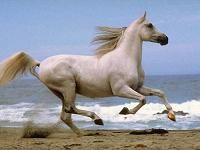
The animals are the specimens of species that make up the kingdom Animalia. Its characteristics include its autonomous capacity for movement and the fact of reproducing itself sexually.
Vertebrate, on the other hand, is an adjective that comes from vertebrātus and that is used in the field of zoology. The term allows to name those living beings that have vertebrae (the bones that make up the spine or spine).
This allows us to point out that a vertebrate animal is a living being of the kingdom Animalia whose skeleton It is made up of a certain number of vertebrae; that is, it has spine. In addition, vertebrate animals have a skull and a Central Nervous System.
Specialists affirm that there are more than 60,000 species of vertebrate animals. Among them is the Homo sapiens which, when it reaches adulthood, has 24 vertebrae.
It is important to note that vertebrate animals are not only on the earth's surface: there are also numerous aquatic animals that have vertebrae. At a general level, it is possible to recognize three differentiated areas in the Body of this class of animals: the head, the trunk and the tail.
In this framework we must talk about the concept of chordate animals, a phylum (that is, a category that the taxonomy places between the class and the kingdom) whose main characteristic is the existence of a notochord or dorsal cord composed of turgid cells, gill slits (gills or gills), a structure called neural tube (from which the central nervous system arises) and a tail (also known as tail, a flexible appendix distinguishable from the torso and is found at the rear end of the body).
Vertebrate animals are believed to have arisen in the era Paleozoic, within the framework of a stage known as the "Cambrian explosion". The first vertebrate animal would have been the Myllokunmingia, but there are no details about its characteristics. It is estimated that this animal lived about five hundred and twenty-five million years ago.
While there are those who believe that the Myllokunmingia is the oldest vertebrate animal on Earth, this claim is at the center of a debate that has not yet concluded, as some scientists exclude it from this group. The theory that places it in the group of vertebrates also includes the assumption that it is a chordate.
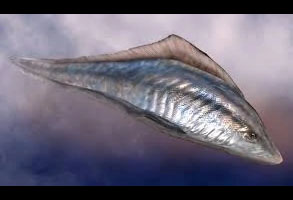
The remains Myllokunmingia fossils were found in China, in a geological formation called Maotianshan schists. Their physical appearance reminds us of today's hagfish (also known as mixineshyperotrets or witch fish), a class of fish in which there is only one order and one family (Myxiniformes Y Myxinidae, respectively), but about sixty species.
Although the Myllokunmingia is believed to be the oldest vertebrate animal, it is worth mentioning that the dimensions of its fossil remains are smaller than we expect when referring to this group: its length is 28 millimeters and its height, 6 millimeters. With regard to its skull and skeleton, specialists described them as cartilaginous-type structures, something that can also be noticed in the hyperoartios, animals similar to eels that in popular language are called lampreys.
In the elements of its skeletal structure no trace of biominialization is appreciated. His head and his trunk they are easily differentiated. It exhibits a dorsal and a ventral fin, both without rays. On its head there are about five gills and on its thorax, twenty-five pointed segments oriented towards the back of the body.
It should be noted that the group of animals that do not have vertebrae is called invertebrates. In this group are insects, worms and other animals.
Leave a Reply