
surname
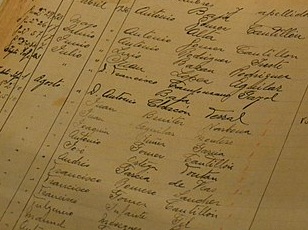
It is called surname to the name of family which enables differentiate and identify people. It is a anthroponymic name that, together with First name, makes it possible to distinguish each individual.
The surnames emerged in the Middle Ages when the members of the bourgeoisie began to access ownership of real estate and land. To prove the ownership of the goods through documentation, the first name was insufficient, with which they began to add certain characteristics or particularities to facilitate identification.
In this way, the first surnames - many of which are still popular - had roots that were easily noticed. From First name of dad, for example, the patronymic surnames What Dominguez (derived from Sunday), Alvarez (Alvaro), Enriquez (Enrique), Gonzalez (Gonzalo), Martinez (Martin) Y Perez (Peter).
The surnames of professions or trades, meanwhile, were related to an occupation: Squire, Barber, Jury, Colonel, Notary, Shoemaker. Another possibility was that the surname was linked to a physical trait or personality, What Bravo, Cheerful, bald, slim or Brown.
In the case of toponymic surnames, came from the place where the person had properties or livedAragon, Burgos, Santander, Saragossa). There were also surnames related to natural elements or living beings, What Coast, Hill, Lakes, Roses, mutton Y Wolves.
The examples mentioned have to do with Hispanic surnames. Each language had its own surname formation process: in English, to mention one case, the surname is common Johnson, which originally referred to John's son (John-son).
Leave a Reply