
Situational analysis

The situational analysis is a study that is carried out in order to know how the company is at a certain time, for this the internal and external environment in which it operates is analyzed.
Above all, to carry out this analysis it is necessary to have past, present and future data. These data are very important, since they can serve as a basis to be able to continue with the development of the corresponding strategic planning process, which will indicate to the company the actions to follow.
In any case, the situational analysis allows to know how the company is at the current moment and what actions should be taken to continue growing in the market and determine what strategies should be put into practice.
Situational analysis of a company
In the situational analysis of a company, the most important aspects that are analyzed are the following:
1. The macroenvironment or macroenvironment
On the one hand, the study of the macroenvironment takes into account all the general external elements that can affect the performance of the company, but in which the company cannot exercise any control.
So external analysis provides the data to help us find the opportunities and threats facing a business.
The external aspects that are taken into account are:
- Economic: These aspects are related to the level of income and purchasing power of people, which could positively or negatively affect the operation of the company. It offers data on the economy and the market in general, but especially on the competitive situation of the business.
- Demographics: It includes all the variables related to variations in the population, which affects the growth or decline of the market.
- Legal and political: It refers to the part of laws and regulations in force in the country where the company operates, therefore, the company has to follow them, which favors or hurts its performance.
- Technological: Technological innovations will help the company, if it has the necessary purchasing power to be able to incorporate them, otherwise it can lead to delay or obsolescence.
- Social and cultural: Socio-cultural aspects are very important, because they include values, beliefs and customs that positively or negatively influence the operation of the business organization.
- Environmental: The environment involves all kinds of variables from climate, geography and any natural disaster that affects the operation of the company.
2. The microenvironment or microenvironment
On the other hand, this analysis has to do with the internal situation of the company, these aspects can be controlled and managed by the company.
Indeed, the results of this analysis allow the company to determine its strengths and weaknesses.
The most important factors that need to be analyzed are:
- Consumers: They are the people or companies that buy the products that are offered in the market for their final consumption or to use them in their production process.
- Intermediaries or distributors: The intermediaries are the ones who buy the products. Later, they sell them again on the market. That is, they take care of your marketing process.
- Providers: They are all the companies that supply the inputs or raw materials so that the production process can be carried out.
- Competitors: They are all the companies that participate within the same market offering the same products or substitute products.

Examples of situational analysis tools
To carry out a situational analysis, the following tools can be used:
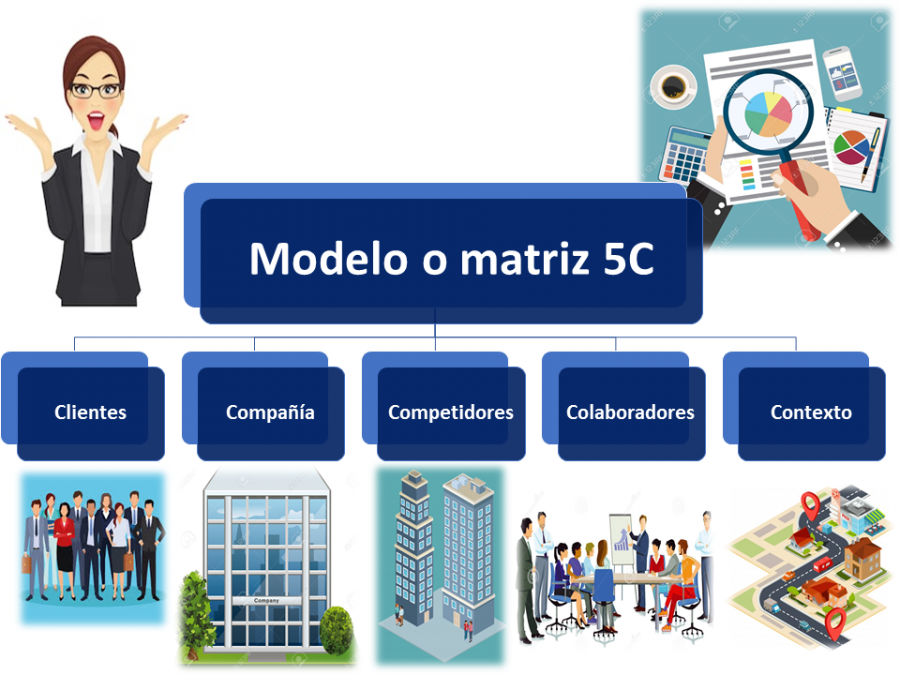
1. Model 5C
This model includes the analysis of the following components
- Customers
- Company
- Competitors
- Collaborators
- Context
Of course, this analysis offers very broad and useful information to know the market environment where the company operates.
2. SWOT or SWOT analysis
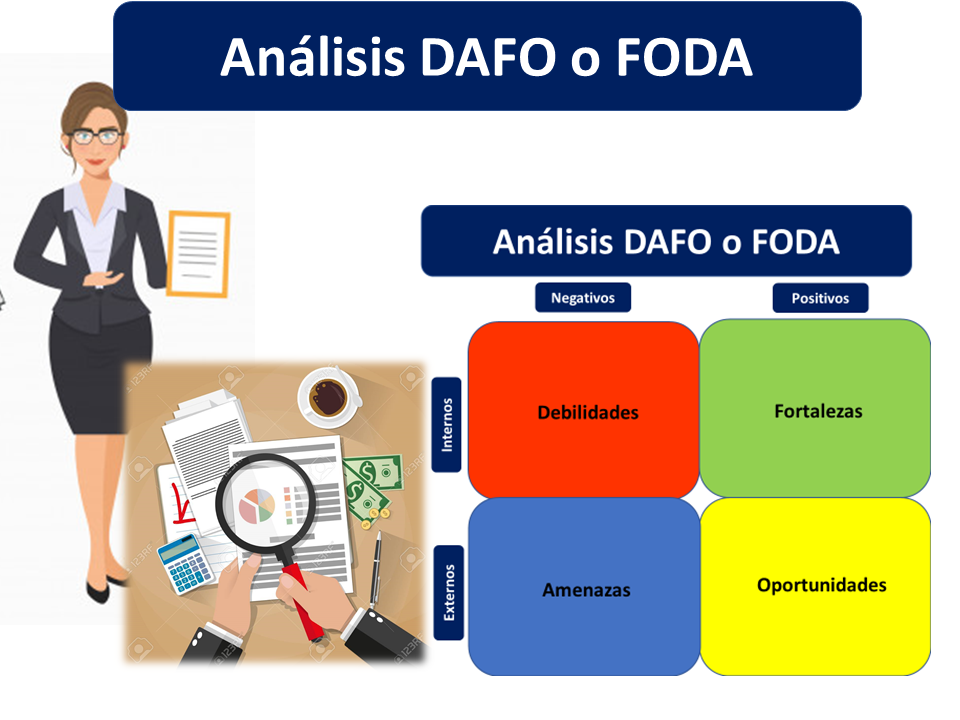
Of course, this model analyzes the internal and external environment. The internal environment allows us to find strengths and weaknesses and the external environment makes it possible to identify threats and opportunities for the company.
Consequently, the most important thing is to consolidate strengths and minimize weaknesses, considering that a threat that may arise in the future could later turn into a weakness. In the same way, an opportunity that we see in the future can become a potential strength.
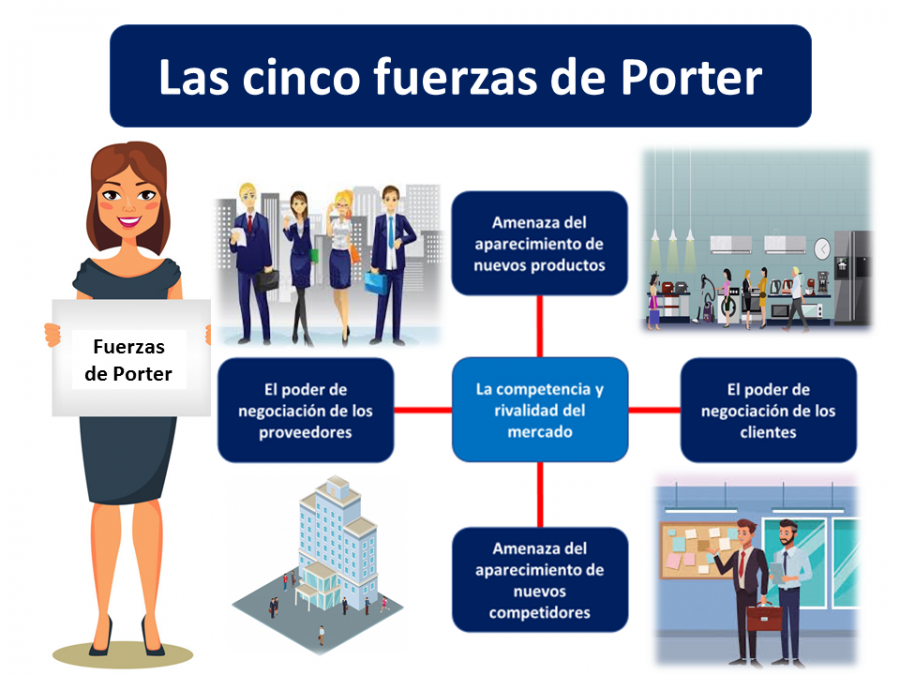
For its part, this analysis focuses on the environment to find threats from the competition and recognize the problems that can be faced, so that the impact it may cause on the company can be minimized.
The points that are analyzed are:
- Market competition and rivalry.
- The bargaining power of customers.
- The power of provider's negociation.
- Threat of the appearance of new competitors.
- Threat of the appearance of new products.
Also, this information helps the company to analyze and compare its situation on its position within the industry in which it competes and adjust its lines of action.
In conclusion, it is clear that the situational analysis is a very important tool for the preparation of any strategic plan carried out by the company and given its importance it should be carried out periodically to have updated information that allows better business strategies to ensure the success.
Leave a Reply