
PESTEL analysis
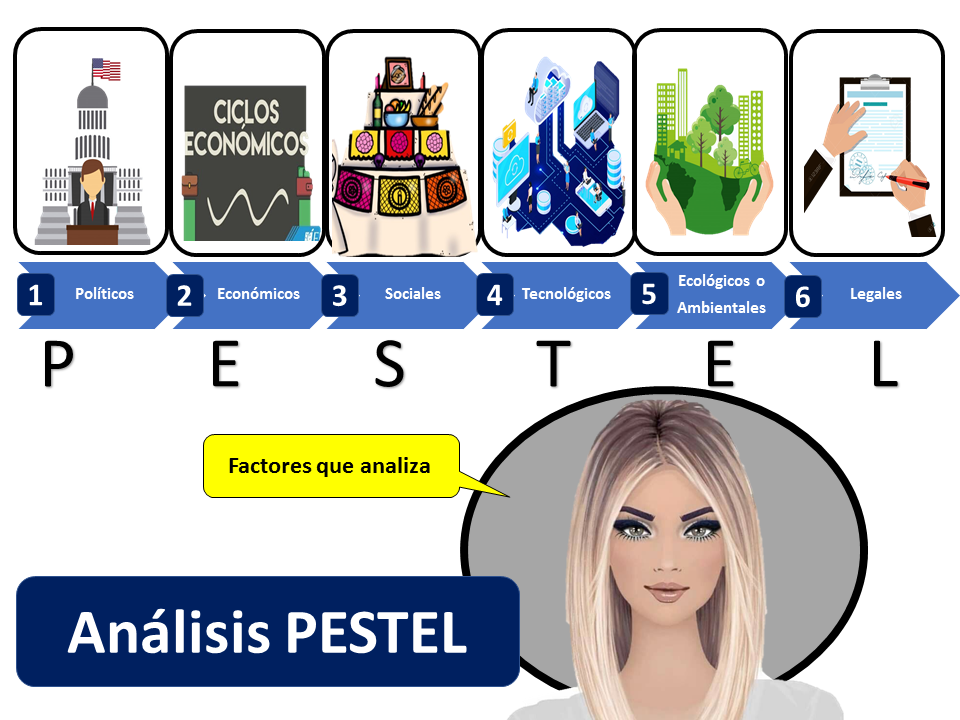
PESTEL is a tool used in strategic analysis that defines the environment of a company, through the analysis of a set of external factors.
The reason for applying the PESTEL analysis is to be able to make a description of the context or environment where a company operates. For this, relevant aspects of the external environment that are vital for the performance of the organization are considered. The analysis of the external environment is essential for any company, since it facilitates the making of important decisions. Especially when it comes to developing short, medium and long term strategies.
Also, the PESTEL analysis is known as PESTAL. Initially it was only used with the acronym PEST. If we take into account the name PEST, only political, economic, social and technological factors were analyzed. However, the initials EL or AL have been added, due to the importance that ecological or environmental factors and legal aspects have reached.
PESTEL analysis factors
The main factors included in the PESTEL analysis are the following:
Political factors
Above all, political factors make it possible to determine and evaluate how government intervention can affect the operation and performance of the company. This occurs through the laws and policies applied by the governmental entity.
In general, they could be aspects such as the government's fiscal and monetary policies, subsidies, trade agreements, and international policies. That is, it refers to all laws and policies that affect the company, whether at the national, regional and international level.
Economic factors
On the other hand, economic factors take into account all macroeconomic variables. These variables are considered both nationally and internationally, since they could favor or hinder the performance of the organization. The most important economic variables are the behavior of the gross domestic product (GDP), the unemployment rate, the price level and the trade balance.
In addition, events such as variations in economic cycles should be considered, especially periods of crisis and boom within the economy. Factors that can benefit or put the company at risk.
Social factors
Next, social factors include elements such as religion, beliefs, culture, habits, interests and preferences of people. All these elements have a favorable or unfavorable effect on the results that a company hopes to achieve. Since the social aspects are changing and they are presenting new trends.
Technological factors
Likewise, technological aspects are vital for a company, due to the levels of innovation that are taking place in the markets. Technological changes can bring great benefits for companies that know how to take advantage of them. But it can do a lot of damage to companies that become obsolete and do not change their infrastructure.
These elements can be the use of new computer programs, taking advantage of new forms of energy and any change in the technology implemented.
Ecological or environmental
Of course, the ecological aspects have to do with all the factors that are directly or indirectly related to the environment. Any change in government regulation or social trends to protect the environment affect the company.
Likewise, we can mention laws on the use of energy, the conservation of the environment, the management of waste and the emission of gases, among some.
Legal factors
Similarly, the legal aspects include all the laws that the company is forced to comply with. Legal regulations can harm or benefit the performance of the company. Laws can affect the production and marketing process of the products offered by a company. In the same way it can affect nationally and internationally.
Laws on intellectual property, social security, minimum wages, licenses can be included among some of the most important.

Benefits of doing a PESTEL analysis
The PESTEL analysis allows a company to know its external environment and thus determine which are the threats that put it at risk. In the same way, you can find opportunities that you must take advantage of to gain an advantage in the market.
Surely, the most important thing is that with the information obtained, the strategic plan that best meets the needs of the company can be designed. Above all, to choose the strategy or strategies to be implemented in the medium and long term.
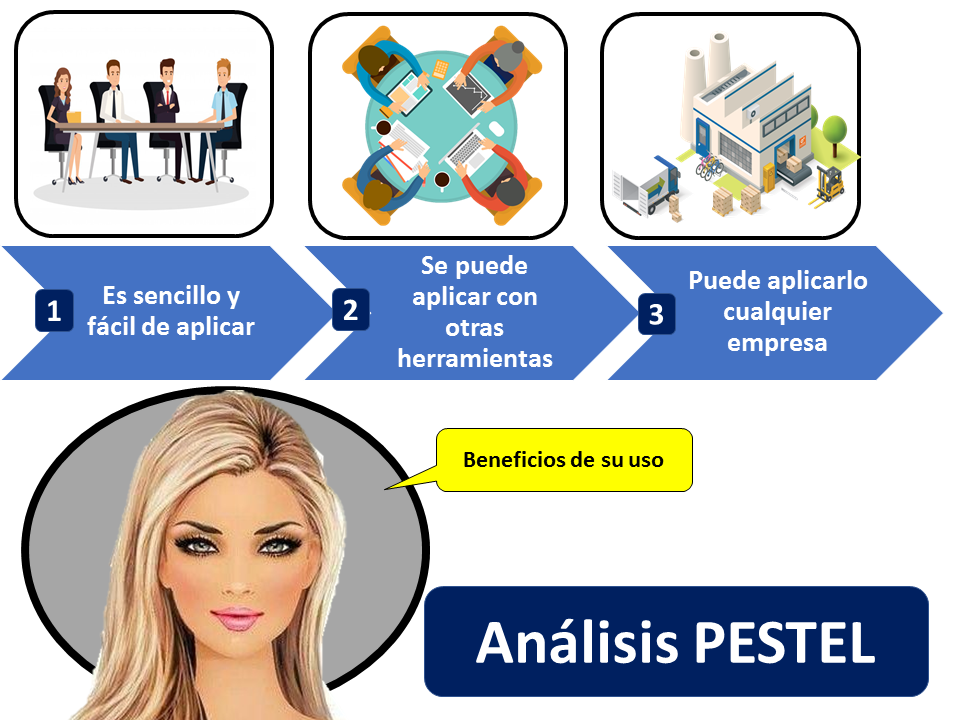
The main benefits of using PESTEL are:
- It is a simple and easy to apply tool.
- It can be applied simultaneously with other strategic analysis tools.
- It can be applied by any company, be it small, medium or large.
To conclude, it can be said that PESTEL analysis is a simple technique to apply, but that it offers very valuable information for any company. Since it allows to know the main elements of the external environment where the organization operates. These elements can be considered threats that pose a risk to the business. Or opportunities that must be exploited to the maximum to achieve greater benefits.
Leave a Reply