
olive
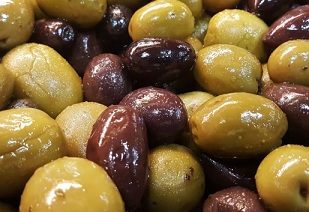
The Aramaic term zaytūnā, diminutive of zaytā, came to classical Arabic as zaytūnah. East word, in turn, arrived at the Hispanic Arabic as azzaytúna. After this etymological journey, we find the notion of olive.
The olive is the fruit of olive (a tree belonging to the family group of the oleáceas). That is why it can be named as olive.
Olive trees are native to East but currently they are also cultivated in other regions. The olive can be eaten after a curing or maceration process that takes away the bitter taste; It is also destined to the elaboration of olive oil.
For their features, the olive is considered to be a drupe. According to the variety of the olive tree, it can be green, yellowish, dwelling or black.
Olives have a single seed, locked in a bone or stone of great hardness. They are usually kept in brine for marketing.
There are olives that are sold with their stone or stone and others, pitted. In the stuffed olives, your bone is replaced by a stuffed, which is usually pepper (bell pepper) or anchovy, although there are multiple options.
The olive oilMeanwhile, it is obtained by pressing the olive. With the intervention of a mill or a press, Pressure on the olive, which is ground. The process allows to form a paste: then, to separate liquids and solids from said paste, it is filtered and centrifuged.
It should be noted that olives have components that contribute to the prevention of cardiovascular diseases and help the digestion. Iron, calcium, Vitamin A Y Vitamin E they are part of the structure of these fruits.
Leave a Reply