
holly
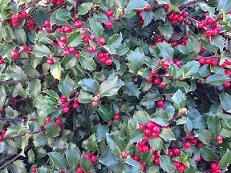
The etymological root of holly is found in aquifolium, a term from the Latin language. A holly is a tree that belongs to the family group of the aquifoliaceae and is framed in the order of the aquifoliales.
Holly, whose scientific name is Ilex aquifolium, usually measures about five meters in height, although trees of this species have been recorded with heights of approximately twenty meters. It is a very long-lived tree, capable of exceeding the century of life.
The sheets of holly, of a dark greenish tone, they are oval in shape and they are persistent. As an outstanding characteristic, it can be mentioned that, in the margins, they present thorns. Holly also has flowers white in color, the same tone that its wood exhibits (which has a great hardness but which, at the same time, is flexible). Their fruit, on the other hand, they are reddish.
Holly trees can be found on the Asian continent and on the European territory. These trees do best in moist environments and cool terrain and are capable of settling in altitudes that reach the 2000 meters.
Some of the best known species of holly are the following: agrifolio, is found in Europe and Asia; Japanese, it is usually not more than 4 meters in height and its fruits are of a glossy black color; AmericanIt can measure more than 9 meters in height and its leaves have a yellowish underside; Perni, named in honor of the missionary Pol Perny, who discovered it, has oval red fruits and rombales leaves; Carolina tea, grows in northern Mexico and the southern United States, and is used as a purgative.
Since it is a very ancient group of species, it has undergone some of the most significant recent changes on the planet. For example, before the ice ages it used to be found in climates warm, although at present they are also in cold environments.
One of the most common uses of holly is ornamentation. During Christmas days, it is often used in a similar way to mistletoe to decorate houses. Holly fruits, on the other hand, have purgative properties for the human being, while the leaves are diuretic.
As for holly wood, it is used in the land of cabinetmaking thanks to its durability and the ease with which it can be stained. In addition, an alkaloid similar to that of the quinine.
As with most plants, holly has many beneficial properties for our health, and that is why many people take advantage of them to treat various disorders. Before proceeding, however, it is very important to clarify that its berries have a high level of toxicity, so much so that if they are ingested in large proportions they can cause death.
Let's see then some of the benefits of holly for our health:
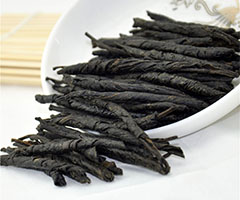
* has remarkable diuretic properties, which is why its leaves are used to promote the elimination of excess fluid in the body, characteristic of diseases such as dropsy, gout or rheumatism. To do this, just add four tablespoons of chopped dry leaves in boiling water, and continue cooking for ten minutes, and then drink three cups a day;
* a decoction of three tablespoons of root dry per liter of water is ideal for treating fever. In general, this is recommended for cases of flu and bronchitis, among other disorders accompanied by high body temperatures, and the dose should not exceed two cups per day;
* Its bark is widely used for cleaning the intestines, and for this it is enough to macerate it in cold for an average of twelve hours;
* it acts as a tranquilizer in cases of epilepsy and hysteria, for example. For this, a infusion of bark and is consumed in doses that do not exceed two glasses per day.
Leave a Reply