
flytrap
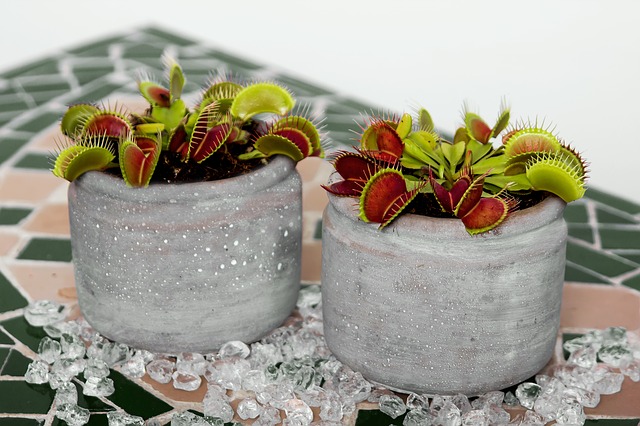
Flytrap is a term that is used in the field of botany to allude to different kinds of plants. As can be seen, the concept derives from the combination of the verb catch (to grab, capture) and the noun fly (an insect).
In general, the notion refers to the species scientifically known as Dionaea muscipula. The flytrap is a carnivorous plant- Obtains nutrients from the insects it hunts through specialized structures.
Dionaea muscipula, a carnivorous plant, is called a flytrap.
Characteristics of the flytrap
The flytrap is native to the American continent and belongs to the family group of the drosaceae. All species of this type have glands that segregate a viscous substance, which allows them catch and direct small animals, especially insects.
In the specific case of the flytrap, it has a large number of very small glands in the upper part of the leaves, where it also has sensitive hairs. In this way, if an insect lands on a leaf and touches the hairs, the leaf in question closes on itself to immobilize the animal, while the glands secrete a liquid that enables their digestion.
It is interesting to note that the flytrap is capable of developing what is known as fast vegetable movement or vegetable quick move. This is how the tropism which is carried out in a very short period of time. The flytrap trap, in this frame, closes in less than a second.
Their habitat
Thanks to its adaptability, the flytrap is cultivated in many regions. However, it is native to southeastern USA. It grows naturally in wetlands and swamps with peat or sandstone soil.
The flytrap can live as houseplant, although it requires that the terms of their natural habitat. At a general level, it can be said that it tolerates up to about 5ºC in winter and up to 26ºC in summer.
Other species known as flytraps
As we indicated above, the Dionaea muscipula It is not the only plant that receives the common name of flytrap. Several species of the gender Penguin, as the Pinguicula vallisneriifolia, the Pinguicula longifolia and the Pinguicula grandiflora.
To Dracunculus vulgaris, meanwhile, it is called flytrap, dragonet, shingles or serpentaria, for example. It is a perennial plant that can reach a height of more than one meter and is poisonous.
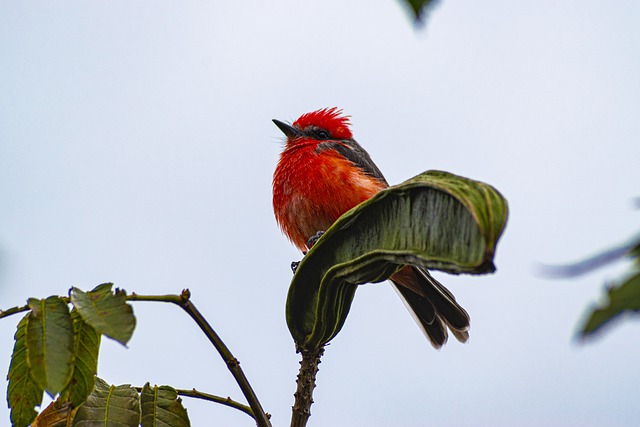
Pyrocephalus rubinus is known as a red-breasted flytrap.
Numerous birds
The idea of flytraps does not only appear in the field of botany. In the zoology We also find this word to refer to various birds.
The yellow flytrap (Capsiempis flaveola), the striped flytrap (Myiodynastes maculatus), the stingray flytrap (Myiophobus fasciatus), the yellowtail flytrap (Terenotriccus erythrurus), the red-breasted flytrap (Pyrocephalus rubinus), the black crested flytrap (Myiarchus tuberculifer), the picón flytrap (Megarynchus pitangua), the hairless flytrap (Camptostoma obsoletum), the Aoxpecker flytrap (Machetornis rixosa) and the thief flytrap (Legatus leucophaius) are birds that share the denomination.
Fly traps
At colloquial language, a flytrap is a device or contraption designed to catch flies. It can be a commercially available device or a homemade item.
To make a flytrap at home, a sweet mixture is usually placed in a container since the sugar attracts flies. Then the insects are somehow trapped inside.
Leave a Reply