
family agriculture
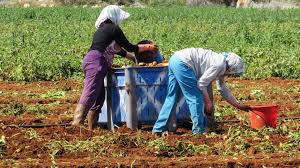
Family farming is a form of agricultural exploitation developed by families, generally in rural areas. This activity is their main source of income and shapes their way of life.
The type of exploitation developed by family farming encompasses small and medium-sized agricultural areas, which usually do not require highly sophisticated cultivation techniques and machinery.
Although technology and large agricultural infrastructures have taken over the agricultural field in recent decades, there are numerous geographical points where this type of modality is still present.
Sometimes, also due to reasons of social and human interest, family farming is developed.
That said, their employment tends to respond to other motivations as well. Among these, the sustainability that it entails, or the remote location, and difficult to access, where the crop can be found.
Main characteristics of family farming
Compared to other existing agricultural modalities, family farming has a series of distinctive features. Traits such as those listed below:
- It covers a wide range of products, motivated in turn by the plant diversity existing in less industrialized areas around the world.
- It suggests the intensive use of environmentally friendly methods. In other words, family farming is identified with sustainable approaches.
- It seeks efficiency in terms of responsible use of natural resources and the protection of rural areas.
- It offers immediate job opportunity in less industrialized areas or with little presence of other economic activities, such as commerce.
- Its workforce includes people of both genders, making the agricultural environment an example of diversity and integration of women.
- Its management is formalized in the form of limited companies, family nuclei or even self-employed agricultural workers.
Family farming and institutional support
Family farming is part of various socioeconomic projects by different institutions.
An example of this is the role of the CAP in the distribution of agricultural funds in the European Union, as well as the protectionism of Latin American policies on rural agricultural holdings of this type.
In this sense, the supply of areas with low levels of per capita income and the decrease in economic poverty ratios often result from the stimulation of family farming projects.
In other words, the countries that establish economic models characterized as an agricultural society promote this concept as a tool to combat poverty and facilitate access to the labor market for a significant number of citizens.
Leave a Reply