
earnest
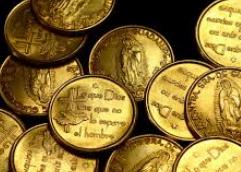
A Greek word passed into Latin as arrhăbo or arrhae, and then to our language like earnest. According to the dictionary of the Royal Spanish Academy (RAE), the term is used in the plural and refers, according to its first meaning, to the pledge that is given as collateral in a contract.
The earnest money, in this framework, is a monetary advance that is given as a signal to reserve a real or personal property. It's about a private contract that establish two parts and that works as a pre-contract: the obligation to specify another contract in the future (the one that determines the sale of the asset in question).
There are different kinds of earnest money. The confirmatory deposit are those that are delivered as part of payment, being a percentage of the total to be paid. In the event that a breach of one of the parties is registered, the other has the right to demand that you solve the problem as soon as possible or that you compensate it for the damages caused.
The penal deposit, on the other hand, are those that the buyer loses or has to return in duplicate if they do not comply with their obligations and does not specify the operation. The penitential depositFinally, they represent the amount that the seller must return in duplicate or that the buyer loses if the operation, for any reason, is not carried out.
It is known as marriage deposit to the thirteen coins traditionally exchanged by the bride and groom during the wedding ceremony. It is a symbolism about the fact of sharing the goods in the new society that is established. After this kind of transaction, the marriage contract is perfects.
The verb perfect, in this case, refers to the fulfillment of certain requirements that make it possible to validity and the acquisition of legal force of a contract, a law or a legal act, according to the bases of the Law. This phenomenon is known as improvement. When the elements of improvement are not fulfilled, then the nullity of the act takes place, which is why it is as if it had not been celebrated.
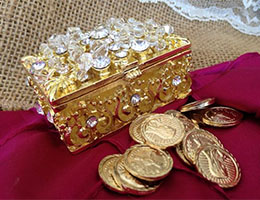
Although the marriage deposit dates back to Romano-Germanic times, the origin of the configuration they currently have is related to a Mozarabic ritual. The division into thirteen parts (which, in this case are coins) represents each of the months of the year plus an extra one for the most disadvantaged, as a gesture of generosity to share with them the fruits that the couple reap from their joint work. It is important to note that it is not an alternative to the dowry or other symbols that also use money or goods.
During the Middle Ages, the marriage deposit had another meaning, since then they did correspond to the endowment for the bride, which used to include properties and gifts of great material importance. These earnest money served so that ecclesiastics could distinguish between concubinage and marriage.
Depending on the time and geographic location, the endowment limit was different; the normal thing is that it was between 10% and 50% of the groom's inheritance or his assets. In addition to this value, it was possible to add gifts, which were also regulated by other limits (these were extended if the bride offered her own gifts to the groom).
Once the couple had children, the woman could no longer dispose of the total earnest money, since they were entitled to three-quarters. If she was widowed, then she could rent them out to support herself financially until she contracted again. marriage.
Leave a Reply