
Debt amortization
Debt amortization is a total or partial cancellation of a specific payment commitment (debt), being anticipated in the form of capital or time.
In other words, the advance of partial or total payment of a debt is possible in any debt that has a fixed due date.
Why pay off a debt?
Amortizing a debt supposes the lowest payment of interest on a debt, since by advancing the payment, the payment of interest is saved in proportion to what is amortized.
This resource is usually part of a certain strategy of the company, since the director or controller The financial institution must determine if debt repayment is the most profitable option for the company.
So what options can be more profitable than a debt repayment? Depends. If the interest rate on the debt is higher than the rate of return on any investment, then the interest payment savings will be higher than the benefit that any investment can give us.
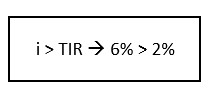
However, if the rate of return on a possible investment is higher than the interest rate being paid on the debt, it will be decided to allocate the company's resources to the investment.
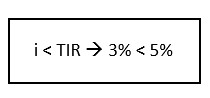
By way of clarification, an investment can consist of the improvement of equipment or machinery of the company, to the acquisition of a subsidiary in another country, for example.
Amortization types
As mentioned above, you can pay off debt in two ways. And, within these two ways, there are two forms of cancellation. On the one hand, we have to determine the amount to be repaid and see if the loan is being partially or totally canceled.
- Partial amortization: It consists of canceling part of a loan, leaving another part still unpaid, so the loan will continue to be paid. It is reduced in our liabilities at the accounting level.
- Total amortization: In this case, the entire loan is canceled, our liability disappears at the accounting level, and therefore, no more installments of that debt are paid.
On the other hand, you have to choose between subtracting time from the life of the debt or subtracting the monthly (or quarterly, annual, etc.) fee on the debt. This only applies to partial amortization, since in total amortization the debt in question is permanently written off.
- Partial amortization in the form of time: It is about canceling a part of the loan in the form of a temporary advance. That is, for a loan that has a maturity date in ten years, for example, it is passed to 5 years, since 50% of the total debt has been amortized. Instead, the fee remains the same.
- Partial repayment in the form of a fee: In a case similar to the previous one, in which 50% of the loan is canceled, this time we continue with the 10-year loan, but in exchange the monthly fee is lowered to 50%.
Therefore, depending on the resources that the company has, it must determine if it is interested in amortizing and if so, in what amount, form and manner to execute that early cancellation.
Debt amortization example
Given a company that has a debt in the form of a loan of € 1,000 (€ 800 of outstanding capital and € 200 in the form of pending interest), determine the total cancellation for accounting purposes.

It should be taken into account that the € 200 of interest belongs to the period in which the debt is being canceled. By accruing interest in the rest of the years, saving lies in preventing interest from being paid again in subsequent years.
Finally, if it were a partial amortization, it would be an identical accounting entry but with an amount less than the entire debt.
Leave a Reply