
beekeeping
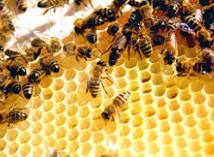
The notion of beekeeping refers to the activities, processes and techniques related to the breeding of insects known as bees. Beekeeping is carried out with the objective that the bees develop and reproduce and then collect the products they make, such as honey.
The origin of beekeeping is very remote: according to cave paintings, it can be estimated that it does about 8,000 years the man already collected the honey that the bees produced. It is believed that the first efforts to control these animals and appropriate their products were developed in the period Neolithic.
Swarms of bees live in hives: in them, with wax, they develop the honeycombs where they put the honey. In hives it is possible to distinguish between drones, the worker bees and the queen bees, that the tasks are distributed according to their condition. Beekeepers are in charge of controlling the population, keeping pests away and taking care that insects do not contract diseases.
The most important product for beekeeping is honey. It is a fluid that bees make through plant secretions, excretions of other insects and the nectar that flowers have, substances that they process with their saliva. The Humans They use honey as a sweetener.
The wax, the propolis, the pollen and the Royal jelly are other products that are usually collected through beekeeping. You even usually get the apitoxin, which is the poison that worker bees secrete to defend themselves against threats and when fighting each other. This poison can be used to relieve certain symptom of joint disorders.
Although the term livestock is usually used in relation to animal species such as cows, sheep and goats, it also includes the group of bees that are raised through beekeeping. In this context, experts assure that it is one of the few activities in this area that allows them to recover the capital invested without having to get out of the exercise itself, and in fact it is a good source of money for those who are dedicated to it full time.
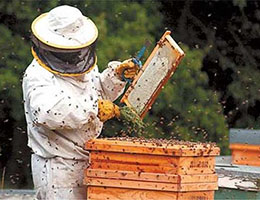
This does not mean that it is easy or that its effect is instantaneous: becoming a beekeeper takes time and a lot of practice. Although there are beekeeping courses in the academic field, many people prefer to learn this discipline of his parents, throughout much of his life, gradually internalizing the various concepts.
Although beekeeping is an activity with very promising economic results, it is not the most popular, probably due to the degree of dedication and concentration it requires to master it. On the other hand, it is believed that beekeepers are not usually open to sharing their experience with others, but tend to hide their techniques and knowledge of the competition, and even the location of their apiaries for fear of potential acts of vandalism.
One of the general advice for those who want to start in the world of beekeeping is arm yourself with patience and be willing to learn step by step. Regarding the number of hives Ideal to start with, it should not be very high or even just one: if there are many, it is very likely to lose control, while with just one there is no possibility of solving problems with the resources of another.
From the point of view of animalists, beekeeping is one more way of mistreatment animal, although it is not on the same level as the torture experienced by other species so that millions of people bring a plate of meat, a fried egg and a cup of milk to their tables. Beekeepers, needless to say, do not agree with this accusation, and even many of them advocate for animal rights, in a world as contradictory as they are.
Leave a Reply