
axolotl
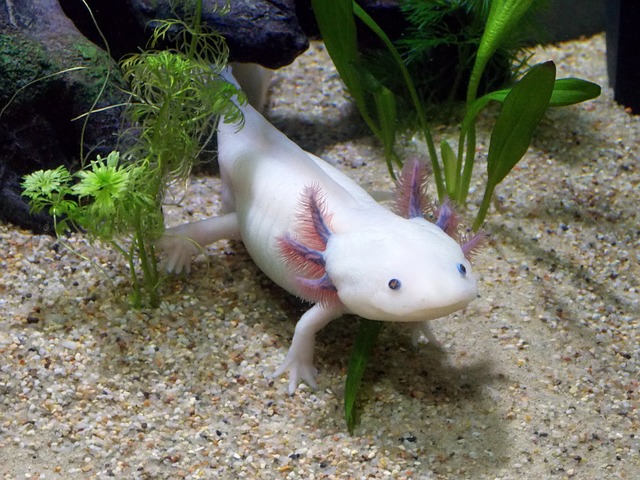
Axolotl It is a term that comes from the Nahuatl word axolotl. The concept refers to a animal which is endemic to the Mexican territory.
Scientific name Ambystoma mexicanum, the axolotl is a amphibian. This means that it is an aquatic species whose temperature varies and that, in its first stage of life, breathes through gills, although later it develops lung respiration as it becomes airy. As the axolotl is part of the amphibians urodelos, maintains its tail and gills in adulthood and has four limbs.
Ambystoma mexicanum is known as axolotl.
Axolotl characteristics
The axolotl can be about 30 centimeters long. It does not go through a metamorphosis and it retains its larval form for a long time, reaching sexual maturity without losing its larval characteristics.
Similar to a tadpole, although much larger and with legs, the axolotl exhibits three pairs of gills that are born in your head. It has small eyes and is characterized by its smooth skin that can present different shades.
Habitat and food
Axolotls live in shallow canals and lakes with abundant aquatic vegetation. Feeds on crustaceans and fishes if it is in the wild, while in captivity it tends to eat worms, worms and even raw meat of beef and chicken.
With small teeth in rows and a retractable tongue, the axolotl can grasp food but cannot chew or tear it; therefore, swallow it whole. When he finds what he wants to eat, he opens the mouth so that the food enters it along with the water.
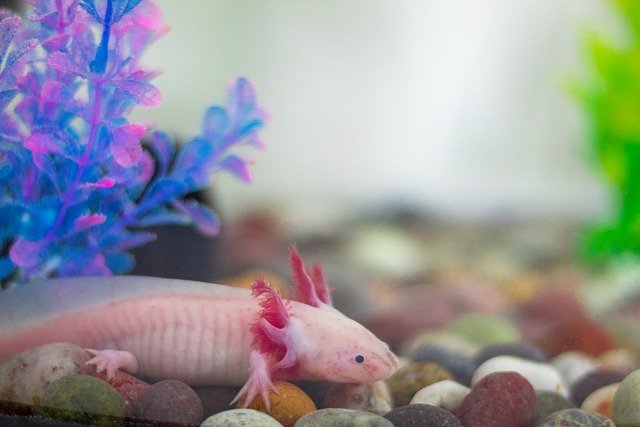
The axolotl is an amphibian that is in danger of extinction.
The axolotl, in danger of extinction
According to International Union for Conservation of Nature (IUCN), the axolotl is situated in critical danger of extinction. Therefore, for the IUCN, there is a very high risk of disappearance of the axolotl in the wild.
The contamination of the water and the arrival of exotic fish to their habitat are factors that threaten the subsistence of the axolotl. Also the capture of specimens to take advantage of their meat due to its supposed medicinal properties and the pet trade affect its survival.
Its importance in Mexican culture
The axolotl always had relevance in Mexican culture. It is mentioned in "General history of the things of New Spain", by example, a codex written by Bernardino de Sahagún at century XVI.
The Mexica already used the axolotl as food with the aim of treating various conditions, such as tuberculosis and respiratory tract disorders. Although this practice continues in some rural populations, the healing properties of axolotl meat have never been scientifically proven.
At present, the axolotl is considered as mascot. It is also taken as model organism for the development of research.
It should be noted that the axolotl also appears in Aztec mythology, linked to the God Xolotl. According to legend, this divinity intended to elude death. With this goal, it first transformed into a plant but, upon being found, then it turned into an amphibian and continued to flee.
Leave a Reply