
atom
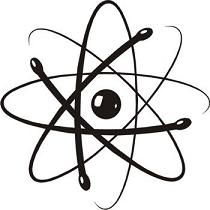
From Latin atŏmum, a atom is the minor amount of a chemical element that has its own existence and what is considered as indivisible. The atom is made up of a core with protons Y neutrons and for several orbital electrons, whose number varies according to the chemical element.
However, in addition to the elements that compose it, it is important to underline that every atom has a series of properties that are essential to take into account when working with it. In this case, we find the fact that they are the size, the mass, the electrical interactions that are established between electrons and protons or the energy levels.
The atom is also referred to as the fundamental particle, thanks to its characteristic of not being able to be divided by chemical processes. From the 16th centuries Y XVII, with the development of the chemistry, atomic theory began to advance with certainties that, until then, were impossible to obtain.
Chemists managed to discover that any liquid, gas or solid could be decomposed into different elements or ultimate constituents (for example, each water molecule is made up of two hydrogen atoms and one oxygen atoms: H2O). John dalton He was the one who showed that atoms were joined together according to certain definite proportions.
However, there have also been other authors who, in a profound and intense way, have left their mark on the study and analysis of atoms. This would be the case, for example, of the British scientist Joseph John Thomson. He went down in history not only as the inventor of the mass spectrometer but also as the discoverer of two fundamental elements: isotopes and the electron.
The New Zealand physicist Ernest Rutherford, the Danish Niels Bohr or the French Louis-Victor de Broglie are other scientists who, throughout history, have developed their own theories and atomic models with more or less success and acceptance by the scientific community.
In this case, it is important to underline the role of the last cited physicist, since in 1929 he won the Nobel Prize for having managed to discover the wave nature of what the electron is.
We said at the beginning of this definition that the atomic nucleus is made up of protons and neutrons. Protons have a positive energy charge, while neutrons do not present load. The difference between the different chemical elements is given by the number of protons and neutrons in their atoms. On the other hand, the number of protons contained in the nucleus of an atom is called atomic number.
The periodic table of elements It is an organization that allows the different chemical elements to be distributed according to certain characteristics and criteria. The simplest nucleus is that of the hydrogen, which has a single proton. That is why it appears in the first place of the table. Hydrogen is followed by helium, which has two protons and two neutrons.
In addition to all the above, we cannot ignore the existence of a colloquial expression that uses the term at hand. It is about the expression “in an atom” that comes to be synonymous with “in the smallest thing”.
Leave a Reply