
athenaeum
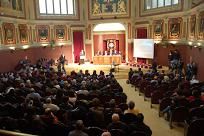
The Greek goddess of to know and the art was known as Minerva, while the equivalent deity among the Romans received the name of Athena. In the Greek city of Athens, to the temple built to pay tribute to this goddess it was called Athenaeum.
From this origin, the concept of athenaeum began to be used to name the groups dedicated to research and artistic or scientific dissemination, and to establishment in which the people dedicated to these tasks met.
An athenaeum, therefore, is currently a entity that groups individuals interested in some branch of the culture or knowledge. These entities may, over time, seek greater formality and constitute themselves as clubs, civil associations, etc.
For example: "Tomorrow there will be a talk on the history of Egypt at the Ateneo de San Juan", "For three months I have been learning cryptography at the athenaeum", “My grandfather, recently arrived from Spain, met with his compatriots in an athenaeum to discuss politics".
The rise of the athenaeums as cultural centers took place in the XIX century. In countries like Spain, the upper classes formed their athenaeums with the intention of maintaining the status quo, while the lower classes developed athenaeums with other ideological orientations in order to promote the revolution.
Athenaeums are generally run by their own members through assemblies. In some cases, there are teams of directors who are elected by the rest of the members and who are in charge of to decide the measures to be taken.
On the other hand, we can mention that The Grand Splendid Athenaeum, popularly known as The Athenaeum, is a famous bookstore of the Buenos aires city It is located in the building that belonged to an old theater.
The Athenaeum of Malaga is a association of literary and artistic interest that was founded in 1966 in the Spanish city and is part of the Federation of Athenaeums of Andalusia. Among its objectives are the following:
* bring together artists, scientists and intellectuals with people interested in their work so that culture in its many forms is fostered and spread;
* organize and promote events such as conferences, exhibitions, seminars, recitals, contests, colloquia and others that serve to disseminate culture;
* work together with other entities, both in the public and private spheres, to achieve these goals.
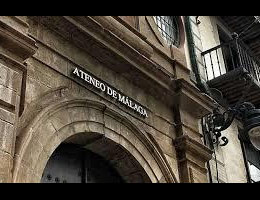
In 2001 he began to edit the magazine Athenaeum of the New Century. Since 2002, the headquarters of the Ateneo de Málaga is located where the School of San Telmo was erected, on Calle Compañía. It has extensions in several Malaga municipalities, such as Fuengirola, Alhaurín el Grande, Torrox, Ronda, Villanueva del Rosario, Torremolinos and Marbella.
In Seville there is also a cultural association with an equivalent name, which was founded in 1887. Every year the Athenaeum of Seville Award, a literature contest that began in 1969 with the help of the founder of the Editorial Planeta, the Spanish publisher Jose Manuel Lara Hernandez.
Among the categories that comprise the Ateneo Prize are the novel, the story and the poetry. Some of the winners since their first call are the following: Manuel Pombo Angulo, Carmen Conde, Antonio Burgos, Mercedes Salisachs, Pedro Casals, María García-Liberós, Fernando Marías, Eugenia Rico, Andrés Pérez Domínguez and Vanessa Montfort.
In 1835 the Athenaeum of Madrid, an institution dedicated to culture, focused on science and literature. Have two exhibition halls, where many of the most celebrated artists have presented their works throughout its almost two centuries of existence.
Leave a Reply