
archeology

The archeology is the science that studies ancient societies from their material remains. Through the analysis of objects and those works built by ancient peoples, this science can reach conclusions about their culture and their ways of life.
People who are dedicated to studying the past framed in this science are known as archaeologists. Your job consists of reconstruct the life of ancient populations from the material manifestations that they have left. Thanks to various techniques developed over time, archaeologists can "read" objects and learn through them various aspects of human behavior in the past. The methodology Study helps them to place the various objects found in a given time and space, to be able to analyze them within a particular context.
Although traditional archeology focuses on the Prehistory and in the It was ancient, in the last decades archaeological technique has been applied to more recent periods, such as the Middle Ages and the Modern age. There is also another branch of archeology whose object is closer to times; is known as industrial archeology and its analysis focuses on the inspection of urban waste.
The most important branches of archeology They are:
* Ethnoarchaeology (he is dedicated to studying a living society based on his production of material artistic works)* Contextual archeology (He focuses his study on the associations that may exist between various objects and the way in which each one influenced the life of society)
* Cognitive archeology (studies the forms of thoughts and the symbols of peoples of the past from the material remains found)
* Experimental archeology (He bases his study on the reconstruction of materials from the means used in ancient times, in order to understand their operation and the limitations they presented)
* Landscape archeology (An attempt is made to understand what the environment in which the people to study lived was like and the way in which they interacted with it)
* Archaeometry (Through physical-chemical techniques that are applied to the object of study, deep analyzes can be established on their construction, the characteristics of their materials and the way in which they were manipulated)
* Holistic archeology (Analyze the abstract and intellectual aspects of a society to get to understand it in depth. Through the notions of politics, art, ecology, etc. that distinguished this human group, it is possible to fully understand the way in which they lived and understand the priorities of each group.)
exist various terms related to archeology, some of them are:
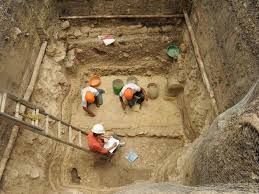
* Archaeological prospecting: consists of the exploration of a territory in search of material vestiges of a society.* Archaeological site: are those places where remains of a settlement have been found and the perimeter is delimited for study. The sites are usually hidden underground, especially if the culture being studied is very old.
* Archaeological excavation: it is an activity that must be carried out with great delicacy since it can only be carried out once in each geographical space. Each excavation of this type must be authorized and certified by a competent institution. Those in charge of carrying it out are usually specialized people, capable of identifying valuable objects from those that are not and of establishing connections between the remains and the culture that has left them.
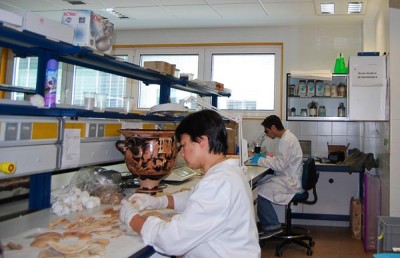
* Laboratory work: consists of the analysis of the remains obtained. Once the archaeological excavation has been carried out successfully, the objects are transferred to a warehouse where, using a series of technological tools, scientists can analyze them and draw conclusions about their provenance.
Leave a Reply